“What Should You Check Before Choosing a Clinic
for Under-Eye Fat Repositioning?”
↑Learn more about under-eye fat repositioning
The moment under-eye bags start to bother you usually comes from a photo. You’ve slept enough, you feel fine, but every picture makes you look tired, or the shadow under your eyes makes you look older than you are. Among international visitors researching plastic surgery clinics in Seomyeon, Busan while planning a trip to Korea, more and more are asking specifically about under-eye fat repositioning. Korea has built a strong global reputation in eye surgery, backed by deep clinical experience and well-organized surgical systems, and the skill level of surgeons here is internationally recognized even for a procedure as precise as under-eye fat repositioning. If you have a trip to Busan, Korea on your calendar, seriously considering under-eye fat repositioning can be a genuinely worthwhile choice.
Understanding why under-eye fat develops in the first place makes it clear why creams or skincare alone can’t fix it. Around the eyes there’s a layer of fat known as orbital fat, and when you’re young, a structure called the orbital septum holds that fat firmly in place behind the eye. As you age, this septum loosens and loses elasticity, allowing the fat to push forward and create that puffy look under the eyes. At the same time, the tissue just below loses its own elasticity, which creates a hollow — the tear trough — right beneath the puffiness. It’s the shadow created by that combination of puffiness above and hollowness below that’s mainly responsible for the tired look. That’s exactly why under-eye fat repositioning doesn’t just remove the puffy part — it also fills in the hollow at the same time.
Some people wonder, why not just remove the fat entirely? Straight fat removal is an option, but simply taking the fat out can leave the area looking even more hollow or sunken, even after the puffiness is gone. As we age, overall facial volume naturally declines, and removing fat on top of that can end up making you look older rather than more refreshed. Under-eye fat repositioning was developed to solve exactly this problem. Instead of removing the protruding fat, the surgeon relocates it into the hollow tear trough area, reducing the puffiness and filling in the hollow at the same time — two results from a single procedure.
It’s also worth looking at how under-eye fat repositioning compares to other under-eye treatments. Under-eye filler is a relatively simple way to fill in a hollow tear trough, but over time the filler can migrate or clump together. Because the skin around the eyes is so thin, filler can also sometimes show through as a bluish tint, known as the Tyndall effect. Under-eye fat repositioning uses your own tissue, so there’s no concern about a foreign material, and a single procedure can deliver results that last for the long term. It does require more recovery time and more surgical skill than filler, but it offers a clear advantage in how natural and long-lasting the result looks.
↑Learn more about under-eye fat repositioning
Under-eye fat repositioning is performed using one of two approaches: a transconjunctival incision or a skin incision. The transconjunctival approach goes through the inner lining of the eyelid, so it leaves no visible scar on the outside. The skin incision approach works through a line just below the lash line, which allows the surgeon to also trim excess skin at the same time if there’s noticeable lower eyelid sagging. Which approach is right for you depends on a full evaluation of how much fat you have and how it’s distributed, how deep your tear trough is, and how much skin laxity is present.
If you’re planning to visit Busan for under-eye fat repositioning, it’s important to plan your stay and surgical schedule together. This procedure typically calls for a stay of at least 5 to 7 days, including the day of surgery. That’s because you’ll need pre-op exams and consultation beforehand, and afterward, your early recovery needs to be checked and your stitches removed. It’s best to plan your flight home for after the initial swelling has settled to a reasonable degree. Busan is well connected, with direct flights to major cities across Asia through Gimhae International Airport, so travel logistics tend to be fairly convenient. Your surgical team is in the best position to tell you exactly when it’s safe to fly.
Many patients also want to know how follow-up works once they’re back home. The final result of under-eye fat repositioning isn’t fully visible until the swelling has completely resolved, usually around two to three months later, so some form of follow-up after you return is necessary. These days, many clinics manage this through telemedicine, letting you share photos or video to check your progress. If you notice anything unusual or you’re concerned about how things are healing, you can simply reach out to your surgical team and share your condition remotely. If you happen to get the chance to visit Busan again, an in-person visit to confirm your final result is always the best option. It’s worth confirming in advance whether the clinic you choose has a proper remote aftercare system for international patients.
You can also arrange an online consultation before your trip to Busan. Sharing details in advance — how long you’ve been concerned about the area and what specifically bothers you, any previous eye procedures, and what result you’re hoping for — can make your in-person consultation far more efficient once you arrive. Once you’re in Busan, you’ll go through a detailed evaluation, an in-person consultation, and finalize your surgical plan, so it’s a good idea to build in at least a day of buffer before your visit. If you’re planning a trip to Busan for under-eye fat repositioning, the most important thing you can do is give yourself plenty of room in both your surgery schedule and your return flight.
↑Learn more about under-eye fat repositioning
There are also a few things worth keeping in mind during recovery. The area around the eyes has a rich blood supply and thin skin, so some swelling and bruising after the procedure is completely normal. Avoid rubbing or putting pressure on your eyes, and hold off on heavy lifting or intense exercise in the early days. Sleeping with your head elevated can help the swelling go down faster. Keeping these precautions in mind and staying in regular contact with your surgical team after you return home is the best way to have a smooth recovery.
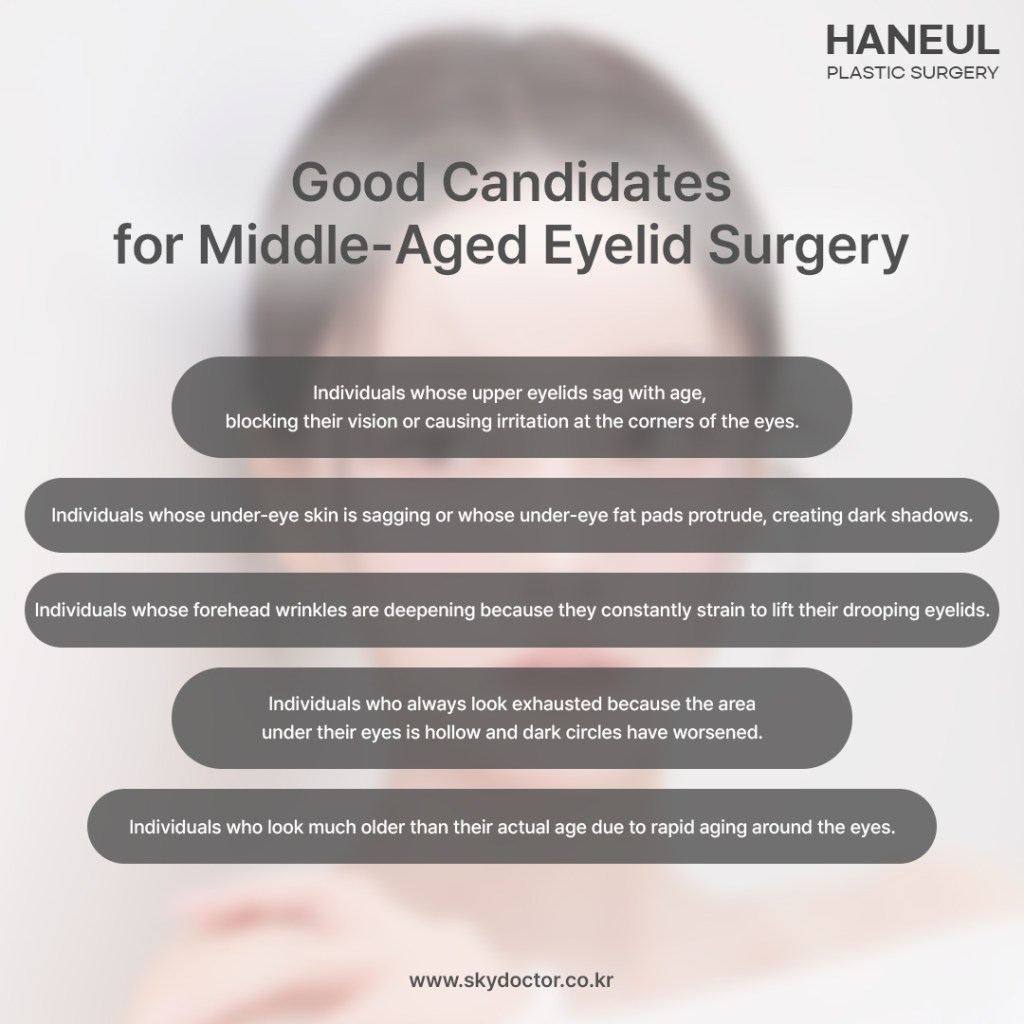
When choosing a clinic for under-eye fat repositioning, it’s worth checking whether they have real experience working with international patients. Confirming things like whether consultations are available in your language, whether you can get the medical documents and records you’ll need before and after surgery, and whether a remote follow-up system is in place once you’re back home can all help you plan your surgery with more peace of mind. Since the eye area is packed with delicate nerves and blood vessels, it’s essential to be treated by a board-certified plastic surgeon with a deep understanding of the anatomy and substantial hands-on experience. If tired-looking under-eyes have been bothering you and you have a trip to Busan, Korea coming up, under-eye fat repositioning can be a way to make a real, lasting change in a single visit.
Q. How long of a stay do I need for under-eye fat repositioning during a trip to Busan?
A. We generally recommend planning for a stay of at least 5 to 7 days, including pre-op exams and consultation. It’s best to plan your return flight for after your early recovery has been checked and your stitches have come out. The exact length of stay can vary depending on the surgical approach and your personal recovery speed, so it’s worth confirming during your consultation.
Q. What does the schedule look like on the day of surgery?
A. Surgery day usually takes at least half a day, since it includes final pre-op checks and anesthesia preparation. Afterward, you’ll typically be monitored in a recovery room for a period of time before heading back to where you’re staying. It can be hard to get around on your own that day, so having someone with you is a good idea, and it’s worth asking the clinic in advance for a clear rundown of what to expect.
Q. How is my recovery followed up once I’m back home?
A. Many clinics manage this through telemedicine, letting you share photos or video to check your progress. If you notice anything unusual or you’re concerned about how things are healing, you can simply reach out to your surgical team and share your condition remotely. It’s worth confirming in advance whether the clinic has a proper remote aftercare system for international patients.
Q. Can I do an online consultation before I travel to Busan?
A. Yes, many clinics offer this. Sharing details in advance — how long you’ve been concerned about the area, any past eye procedures, and what result you’re hoping for — can make your in-person consultation much more efficient once you arrive. Once you’re there, you’ll go through a detailed evaluation, meet the surgeon in person, and finalize your surgical plan.
Q. When can I fly home after surgery?
A. Most patients fly home after about 5 to 7 days, once their recovery has been checked. Exactly when it’s safe to fly depends on your individual recovery, so it’s safest to follow your surgical team’s guidance. Long flights can affect swelling, so it’s best to build in extra buffer when planning your return date.


답글 남기기