“Can a Facelift Address Sagging Cheeks and Nasolabial Folds at the Same Time?”
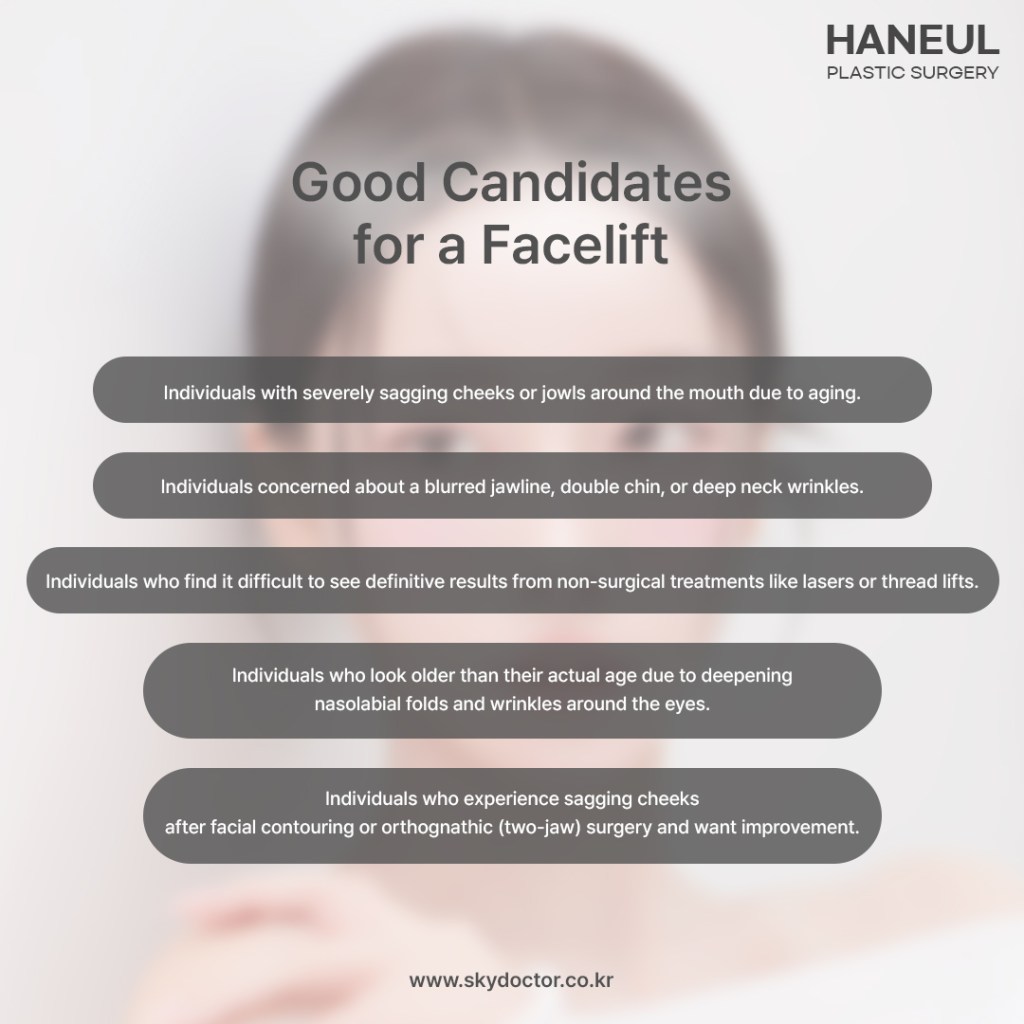
Have you ever caught yourself gently lifting your cheek with your hand while looking in the mirror? Right to that spot where you wish it would just stay. If that feeling keeps coming back to you, you may already be at the point where it’s worth seriously considering a facelift. Among international visitors researching plastic surgery clinics in Seomyeon, Busan while planning a trip to Korea, more and more are asking specifically about facelifts. Many people arrive at this point after trying different creams, energy-based lifting devices, and thread lifts, only to find the results falling short each time — and it’s often at that stage, once they’ve concluded that they need something more fundamental, that they start looking into a facelift while planning a trip to Korea. Korea has built a strong global reputation in facelift surgery, backed by deep clinical experience and well-organized surgical systems.
Understanding how facial aging actually progresses makes it much clearer why a facelift eventually becomes necessary. The tissues that once sat firmly in place when you were young gradually start to descend as you get older. It’s not just the skin that sags — the fat layer and fascia beneath it move down along with it, which is why surface-level treatments alone can’t reverse this kind of change. As the cheeks sag, the nasolabial folds deepen, marionette lines form below the corners of the mouth, and the jawline loses its definition, giving the whole face a heavier look. A facelift doesn’t just address this at the surface of the skin — it takes a more fundamental approach by lifting and securing the sagging tissue itself.
This is exactly what sets a facelift apart from other anti-aging treatments. Botox and fillers work by temporarily filling in wrinkles or relaxing muscles, and thread lifts work by inserting threads to pull tissue upward. Device-based lifting treatments like Ultherapy Prime or Oligio X use energy to stimulate collagen regeneration. All of these methods work and each has its place, but once the tissue has already descended significantly, non-surgical methods alone often can’t deliver the result you’re looking for. At that stage, a facelift is the method that can deliver the most definitive, longest-lasting result.
The single most important concept in a facelift is the SMAS layer. SMAS is the fascia layer beneath the skin that connects the muscle and fat, and lifting and securing this layer together with the skin is what allows the result to look natural and last a long time. In the past, surgeons used to simply pull and secure the skin on its own, which tended to look unnatural and didn’t last very long. As techniques evolved to address the SMAS layer as well, results became far more natural and started lasting much longer. If a facelift consultation includes a real discussion of how the SMAS layer will be handled, that’s a sign you’re talking to a clinic that takes the quality of the surgery seriously.
There’s more than one way to perform a facelift. A full facelift involves incisions along the front and back of the ear and lifts tissue broadly across the entire face, offering the most definitive improvement for significant sagging. A mini lift uses a smaller incision, focused mainly around the front of the ear, and is chosen for relatively mild sagging or when you want to target a specific area. Which approach is right for you comes down to a full evaluation of how much and where you’re sagging, along with the result you’re hoping for. That’s exactly why getting an accurate assessment of this during your facelift consultation matters so much.
There are also procedures that are often combined with a facelift. If lifting has corrected the sagging but volume loss is still an issue, fat grafting is often planned alongside it to create a more youthful, refreshed look. If the skin above the eyelids has also started to sag, upper blepharoplasty may be planned together with the facelift, and if the forehead has sagged significantly, a brow lift may be added as well. Lifting the neck area at the same time can also refine the neckline and improve neck wrinkles. When planning a facelift, evaluating the overall aging of the face and addressing everything that needs attention together is what leads to the most harmonious result.

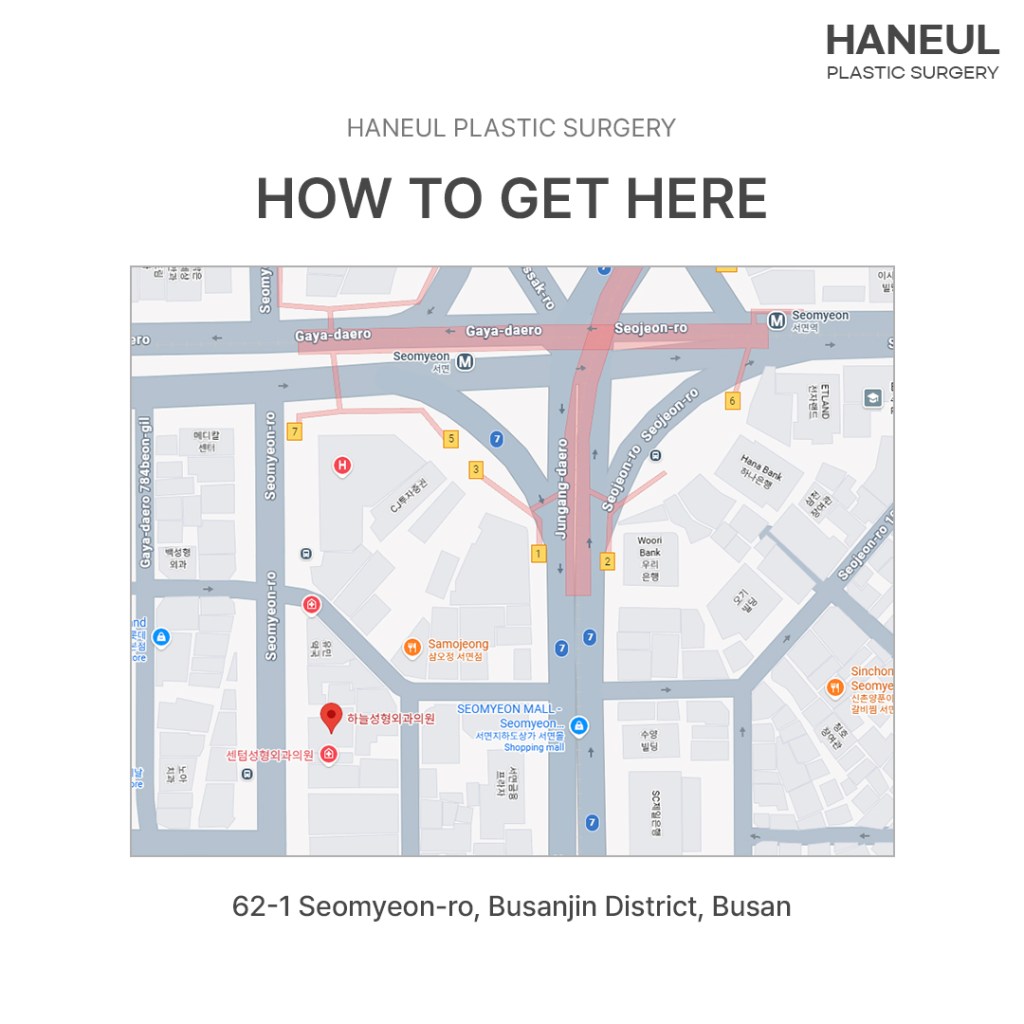
If you’re planning to visit Busan, Korea for a facelift, it’s important to plan your stay and surgical schedule together. A facelift typically calls for a stay of at least 10 to 14 days, including the day of surgery. That’s because you’ll need detailed exams and consultation beforehand, and afterward, your early recovery needs to be checked and your stitches removed. It’s best to plan your flight home for after the initial swelling has settled to a reasonable degree. Busan is well connected, with direct flights to major cities across Asia through Gimhae International Airport, so travel logistics tend to be fairly convenient. Your surgical team is in the best position to tell you exactly when it’s safe to fly.
Many patients also want to know how follow-up works once they’re back home. The final result of a facelift isn’t fully visible until three to six months later, so some form of follow-up after you return is necessary. These days, many clinics manage this through telemedicine, letting you share photos or video to check your progress. If you notice anything unusual or you’re concerned about how things are healing, you can simply reach out to your surgical team and share your condition remotely. If you happen to get the chance to visit Busan again, an in-person visit to confirm your final result is always the best option. It’s worth confirming in advance whether the clinic you choose has a proper remote aftercare system for international patients.
You can also arrange an online consultation before your trip to Busan. Sharing details in advance — how long you’ve been dealing with sagging and what type it is, any previous lifting treatments, and what result you’re hoping for — can make your in-person consultation far more efficient once you arrive. Once you’re in Busan, you’ll go through a detailed evaluation, an in-person consultation, and finalize your surgical plan, so it’s a good idea to build in at least a day of buffer before your visit.
When choosing a clinic for a facelift, it’s worth checking whether they have real experience working with international patients. Confirming things like whether consultations are available in your language, whether you can get the medical documents and records you’ll need before and after surgery, and whether a remote follow-up system is in place once you’re back home can all help you plan your surgery with more peace of mind. A facelift is a demanding procedure that involves a complex network of nerves and blood vessels across the face, so it’s essential to be treated by a board-certified plastic surgeon with a deep understanding of the anatomy and substantial hands-on experience. If sagging cheeks, deep nasolabial folds, and a fading jawline have been on your mind for a while, a facelift built around your trip to Busan, Korea can be a way to make a real, fundamental change in a single visit.
Q. How long of a stay do I need for a facelift during a trip to Busan, Korea?
A. We generally recommend planning for a stay of at least 10 to 14 days, including pre-op exams and consultation. It’s best to plan your return flight for after your early recovery has been checked and your stitches have come out. The exact length of stay can vary depending on the surgical approach and your personal recovery speed, so it’s worth confirming during your consultation.
Q. What does the schedule look like on the day of surgery?
A. Surgery day requires at least half a day, since it includes final pre-op checks and anesthesia preparation. Afterward, you’ll typically be monitored in a recovery room for a period of time before heading back to where you’re staying. It can be hard to get around on your own that day, so having someone with you is a good idea, and it’s worth asking the clinic in advance for a clear rundown of what to expect.
Q. How is my recovery followed up once I’m back home?
A. Many clinics manage this through telemedicine, letting you share photos or video to check your progress. If you notice anything unusual or you’re concerned about how things are healing, you can simply reach out to your surgical team and share your condition remotely. It’s worth confirming in advance whether the clinic has a proper remote aftercare system for international patients.
Q. Can I do an online consultation before I travel to Busan?
A. Yes, many clinics offer this. Sharing details in advance — how long you’ve been dealing with sagging, any previous lifting treatments, and what result you’re hoping for — can make your in-person consultation much more efficient once you arrive. Once you’re there, you’ll go through a detailed evaluation, meet the surgeon in person, and finalize your surgical plan.
Q. When can I fly home after surgery?
A. Most patients fly home after about 7 to 10 days, once their recovery has been checked. Exactly when it’s safe to fly depends on your individual recovery, so it’s safest to follow your surgical team’s guidance. Long flights can affect swelling, so it’s best to build in extra buffer when planning your return date.
 하늘성형외과의원
댓글 남기기