“How Long of a Stay Do You Need for Cosmetic Rhinoplasty?”
↑ Learn more about Cosmetic Rhinoplasty
For a lot of people, it takes much longer than expected to actually decide to go through with rhinoplasty. Some have been self-conscious about their nose since childhood but kept putting off surgery out of fear, others have relied on filler as a temporary fix and are starting to feel its limits, and others have simply never felt comfortable with their profile in photos — and at some point, all of these paths lead people to seriously start researching rhinoplasty. Among international visitors researching plastic surgery clinics in Seomyeon, Busan while planning a trip to Korea, more and more are asking specifically about rhinoplasty. Korea has built a strong global reputation in rhinoplasty, and Korean surgeons are internationally recognized especially for techniques that demand real precision, like autologous cartilage tip surgery and functional rhinoplasty. If you’re planning a trip to Busan, Korea with enough time built in, seriously considering rhinoplasty can be a genuinely worthwhile choice.
One thing that sets rhinoplasty apart from other cosmetic procedures is just how many variables have to be considered at once. The bridge and tip as seen from the front, the angle and height of the nose from the side, the ratio between the nose and the philtrum, the balance between the tip and the nostrils, and how the line flows from the forehead down into the nose — it’s a genuinely complex procedure where all of these factors have to be weighed together. This is exactly why the consultation matters so much in rhinoplasty. Talking through what kind of nose you actually want, and exactly what bothers you about your nose right now, in real depth with your surgeon is the single biggest factor in how the result turns out.
Rhinoplasty techniques broadly fall into two categories: implant-based and cartilage-based. The implant method uses a medical-grade material like silicone or Gore-Tex, inserted into the nose to build height and shape. The cartilage method uses your own septal, ear, or rib cartilage to build the nose, which avoids any foreign-body reaction and tends to give a more natural-looking result. These days, the most common approach actually combines both — using an implant to build height along the bridge, and your own cartilage to refine the shape of the tip. Which approach is right for you in a rhinoplasty consultation comes down to evaluating your current nasal structure together with the result you’re hoping for.
Let’s start with the bridge. A low or flat bridge can make the face look flat or give a dull impression overall. Adding height with an implant often brings more dimension to the face and changes the overall look. What matters here isn’t how high you go, but finding the height that’s actually proportional to your own face. Too high, and it looks artificial; too low, and the change won’t feel significant. Carefully choosing the shape and size of the implant so the line flows naturally from the forehead into the nose is what really makes a bridge augmentation work.
↑ Learn more about Cosmetic Rhinoplasty
Tip surgery is what determines how polished the final result of a rhinoplasty looks. No matter how nice the bridge looks, a blunt or drooping tip can make the whole nose feel unresolved. Tip surgery is almost always done using autologous cartilage — septal or ear cartilage is used to support the tip and shape it in the desired direction. It’s not just about raising the tip; the angle between the tip and the philtrum, and the proportion between the tip and the nostrils, all need to be considered together to create a nose that looks natural from both the front and the side.
Functional rhinoplasty is also an area of growing interest within rhinoplasty. Rather than focusing purely on appearance, it addresses functional issues in the nose at the same time, such as a deviated septum or enlarged turbinates. If you’ve had ongoing congestion, or congestion that’s consistently worse on one side, it’s worth considering functional correction alongside your rhinoplasty plan. Planning surgery to improve both appearance and function at once means you get a cosmetic result along with a real, practical improvement in breathing.
If you’re planning to visit Busan, Korea for rhinoplasty, it’s important to plan your stay and surgical schedule together. Rhinoplasty typically calls for a stay of at least 7 to 10 days, including the day of surgery. That’s because you’ll need consultation and a detailed evaluation beforehand, and afterward, your splint and stitches need to come out and your early recovery needs to be checked. It’s best to plan your flight home for after the initial swelling has settled to a reasonable degree. Busan is well connected, with direct flights to major cities across Asia through Gimhae International Airport, so travel logistics tend to be fairly convenient. Your surgical team is in the best position to tell you exactly when it’s safe to fly.
Many patients also want to know how follow-up works once they’re back home. The final result of rhinoplasty isn’t fully visible until the swelling has completely resolved, usually around three to six months later, so some form of follow-up after you return is necessary. These days, many clinics manage this through telemedicine, letting you share photos or video to check your progress. If you notice anything unusual or you’re concerned about how things are healing, you can simply reach out to your surgical team and share your condition remotely. If you happen to get the chance to visit Busan again, an in-person visit to confirm your final result is always the best option.
↑ Learn more about Cosmetic Rhinoplasty
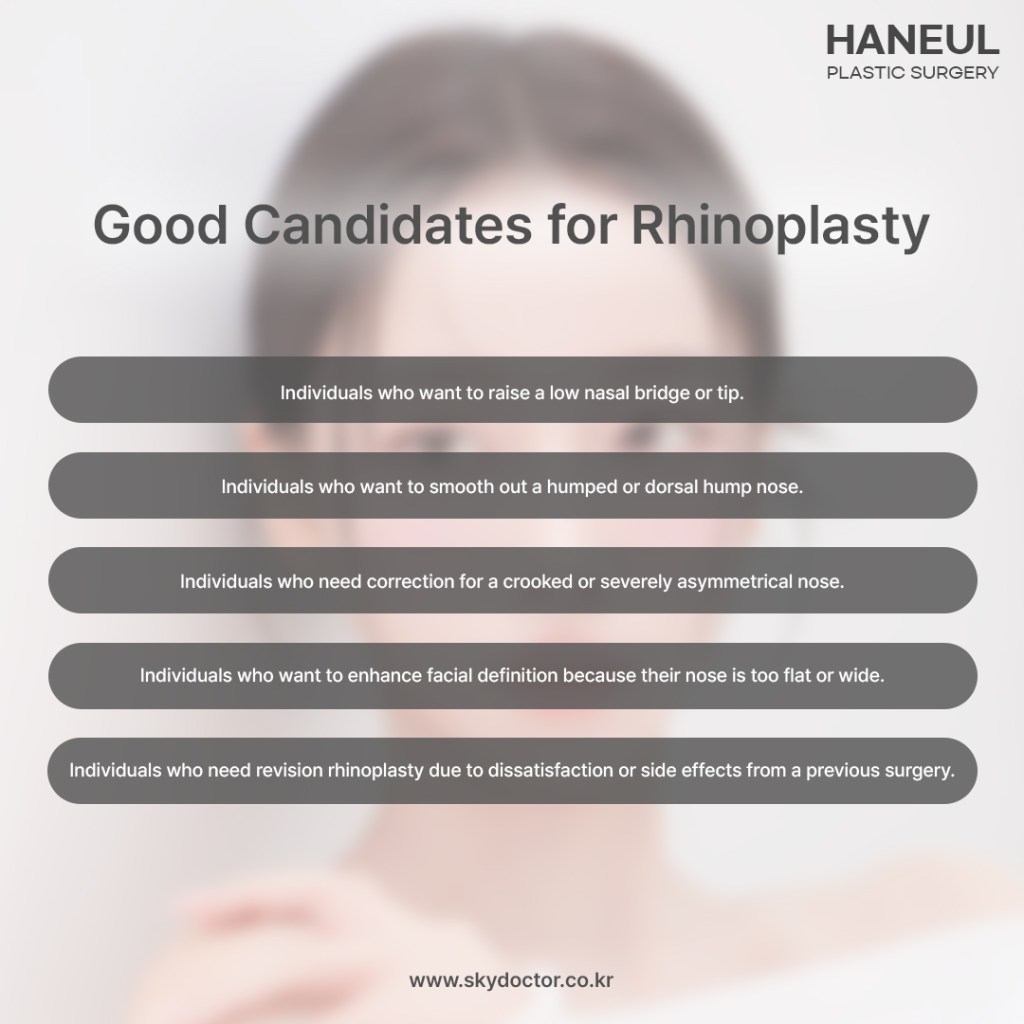
Some people also plan a trip to Korea specifically to consider revision rhinoplasty. This usually comes up when a previous implant becomes visible under the skin over time, the shape of the nose has changed, or an infection has developed — and revision rhinoplasty tends to be far more complex and technically demanding than a first procedure. Getting a precise evaluation from a surgeon with substantial revision experience matters a great deal, which is part of why a steady stream of international patients travel to Korea specifically for revision surgery.
When choosing a clinic for rhinoplasty, it’s worth checking whether they have real experience working with international patients. Confirming things like whether consultations are available in your language, whether you can get the medical documents and records you’ll need before and after surgery, and whether a remote follow-up system is in place once you’re back home can all help you plan your surgery with more peace of mind. The basics to check are whether a board-certified plastic surgeon personally handles everything from consultation to surgery, whether they have broad experience with both primary and revision rhinoplasty, and whether they have real experience with cartilage-based nasal reconstruction. Since the results of rhinoplasty last a long time, gathering enough information and carefully choosing your clinic before your trip to Busan, Korea is the single most important part of your preparation.
Q. How long of a stay do I need for rhinoplasty during a trip to Busan, Korea?
A. We generally recommend planning for a stay of at least 7 to 10 days, including pre-op exams and consultation. It’s best to plan your return flight for after your splint and stitches have been removed. The exact length of stay can vary depending on the surgical approach and your personal recovery speed, so it’s worth confirming during your consultation.
Q. What does the schedule look like on the day of surgery?
A. Surgery day requires at least half a day, since it includes final pre-op checks and anesthesia preparation. Afterward, you’ll typically be monitored in a recovery room for a period of time before heading home the same day. It can be hard to get around on your own that day, so having someone with you is a good idea, and it’s worth asking the clinic in advance for a clear rundown of what to expect.
Q. How is my recovery followed up once I’m back home?
A. Many clinics manage this through telemedicine, letting you share photos or video to check your progress. Since the final result of rhinoplasty isn’t visible until three to six months later, it’s a good idea to keep sharing your progress consistently after you return home. It’s worth confirming in advance whether the clinic has a proper remote aftercare system for international patients.
Q. Can I do an online consultation before I travel to Busan?
A. Yes, many clinics offer this. Sharing details in advance — what bothers you about your nose, any previous procedures, and what result you’re hoping for, along with photos — can make your in-person consultation much more efficient once you arrive. Once you’re there, you’ll go through a detailed evaluation, meet the surgeon in person, and finalize your surgical plan.
Q. When can I fly home after surgery?
A. Most patients fly home after about 7 to 10 days, once their recovery has been checked. Exactly when it’s safe to fly depends on your individual recovery, so it’s safest to follow your surgical team’s guidance. Long flights can affect swelling, so it’s best to build in extra buffer when planning your return date.
 하늘성형외과의원
댓글 남기기