“How Should You Maintain Your Results After a Mini Facelift Once You’re Back Home?”
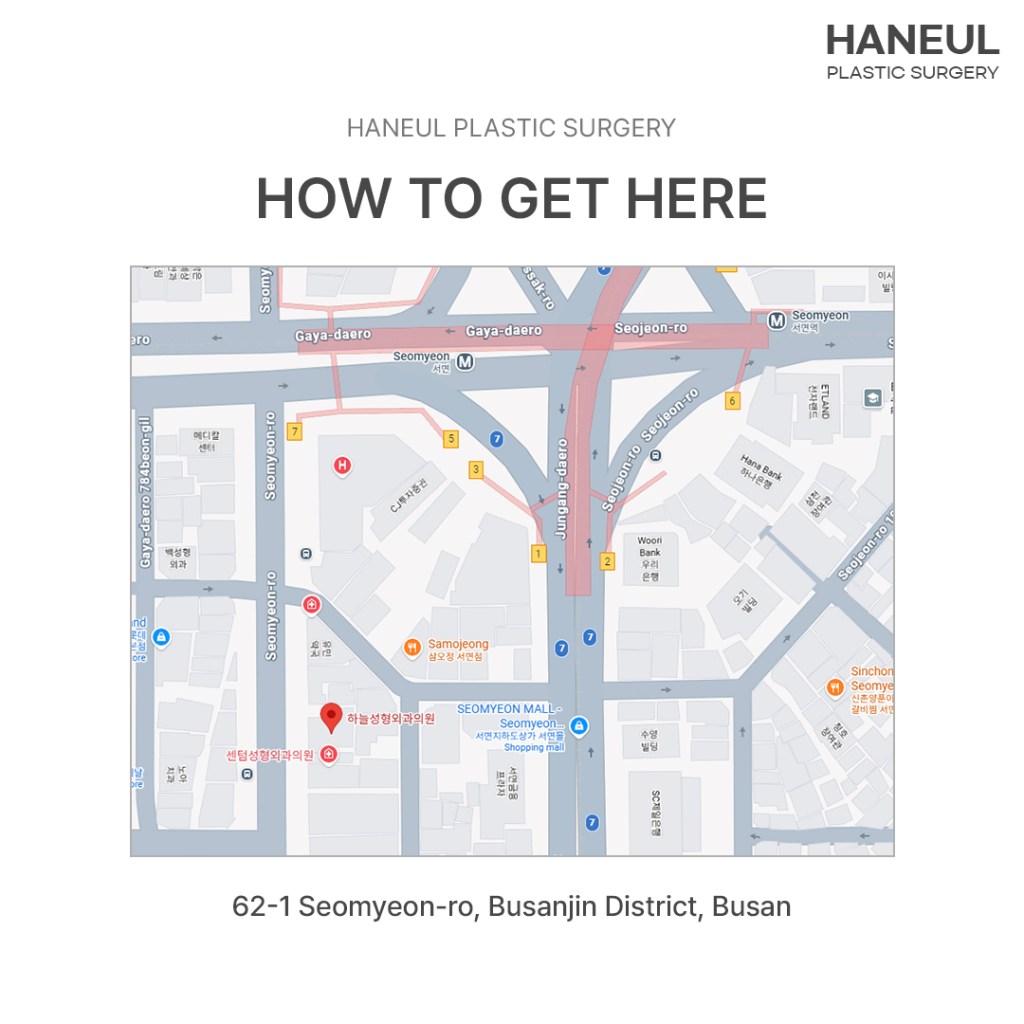
When people hear the word “facelift,” a certain image often comes to mind: a long hospital stay, bandages wrapped around the entire face, weeks of recovery. That image keeps a lot of people who are bothered by sagging from ever booking a consultation in the first place. Among international visitors researching plastic surgery clinics in Seomyeon, Busan while planning a trip to Korea, more and more are asking specifically about the mini facelift. For anyone looking for a way to correct sagging with less commitment than a traditional facelift, the mini facelift is a genuinely practical option. Korea has built a strong global reputation in lifting surgery, backed by deep clinical experience and well-organized surgical systems, so if you’re planning a trip to Busan, Korea with enough time built in, seriously considering a mini facelift can be a genuinely worthwhile choice.
It helps to understand exactly what a mini facelift is. A mini facelift uses a smaller incision and a shorter recovery than a full facelift. Where a traditional facelift makes broad incisions in front of and behind the ear to lift tissue across the entire face, a mini facelift keeps the incision mainly around the front of the ear, focusing on correcting the areas where sagging is most noticeable. Because the incision is smaller, swelling and recovery time are shorter than with a full facelift, and the psychological barrier to getting it done is much lower too. This is part of why the mini facelift stands out as such a practical choice for international patients — it puts relatively less pressure on how long you need to stay.
↑ Learn more about mini lifting
The difference between a mini facelift and a thread lift is another point of confusion. A thread lift is a non-surgical method that uses inserted threads to lift tissue without any incision — it’s quick and recovery is very fast, but the results don’t last as long and the degree of correction is limited. A mini facelift lifts and secures the tissue directly through an incision, so you can expect a more definitive, longer-lasting result than a thread lift. If you’ve had repeated thread lifts back home and feel like the results fade quickly or seem to get weaker each time, that might be a sign it’s worth using a trip to Korea to consider a mini facelift instead.
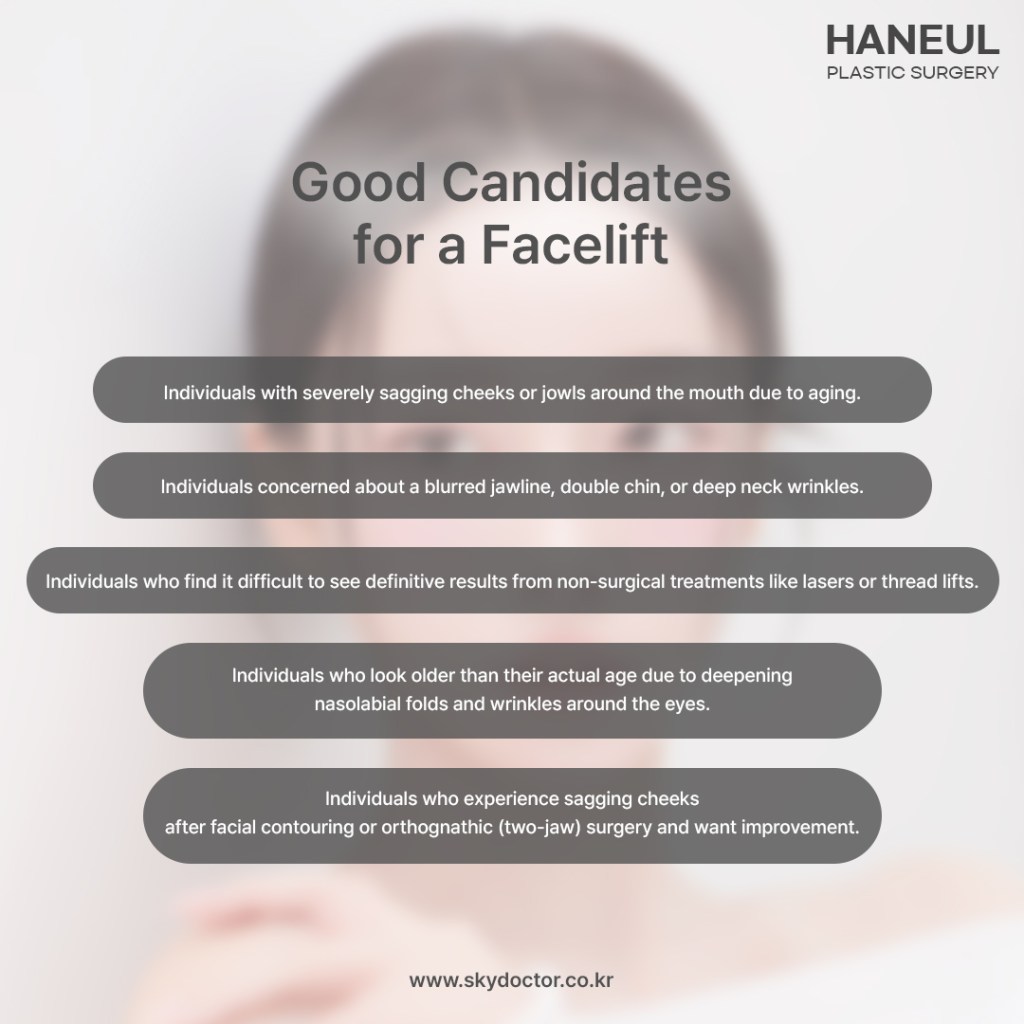
There are cases where a mini facelift works especially well. It can be a great option if your sagging is still in the early-to-moderate stage and doesn’t yet call for a full facelift, if you’re noticing changes concentrated in specific areas like sagging cheeks, nasolabial folds, or a less defined jawline, or if you’ve been managing things with non-surgical treatments but feel like you need a more definitive result at this point. On the other hand, if sagging has already progressed quite a bit, a mini facelift alone may not be enough to get the result you’re after, and in that case, the consultation may end up pointing toward a full facelift instead.
Another strength of the mini facelift is how well it can be combined with other treatments. Correcting sagging with a mini facelift while also restoring lost volume with fat grafting can produce a much more youthful, refreshed result. If lifting alone won’t get you there because volume loss is part of the picture, that combination matters. Some plans also pair a mini facelift with a non-surgical treatment like Ultherapy Prime, layering effects at different tissue depths. Discussing which combination of treatments would actually deliver the best result is an important part of getting the most out of a mini facelift consultation.
The key question with a mini facelift is whether the SMAS layer is being addressed even with a smaller incision. SMAS is the fascia layer beneath the skin, and lifting and securing this layer along with the skin is what makes the result look natural and last a long time. The difference between a mini facelift that properly addresses the SMAS layer, even with a reduced incision, and one that simply pulls and secures the skin, becomes more apparent as time goes on. It’s worth asking specifically during your consultation exactly how the surgery will be performed.

↑ Learn more about mini lifting
If you’re planning to visit Busan, Korea for a mini facelift, it’s important to plan your stay and surgical schedule together. A mini facelift generally recovers faster than a full facelift, but including pre-op exams and consultation, plus an early recovery check and stitch removal afterward, a stay of at least 7 to 10 days is often recommended. It’s best to plan your flight home once you’ve recovered to a point where you can comfortably go about daily life. Busan is well connected, with direct flights to major cities across Asia through Gimhae International Airport, so travel logistics tend to be fairly convenient. Your surgical team is in the best position to tell you exactly when it’s safe to fly.
Many patients also want to know how follow-up works once they’re back home. The complete result of a mini facelift isn’t visible until three to six months later, so some form of follow-up after you return is necessary. These days, many clinics manage this through telemedicine, letting you share photos or video to check your progress. If you notice anything unusual or you’re concerned about how things are healing, you can simply reach out to your surgical team and share your condition remotely. If you happen to get the chance to visit Busan again, an in-person visit to confirm your final result is always the best option. It’s worth confirming in advance whether the clinic you choose has a proper remote aftercare system for international patients.
How long the results of a mini facelift last is another common question. The effect generally lasts around 3 to 5 years, though this varies depending on your skin condition, how quickly you age, and your lifestyle. It tends to last somewhat less time than a full facelift, but pairing your mini facelift with non-surgical maintenance afterward can help extend how long the results hold up. It’s worth planning ahead to keep up regular maintenance back home — with thread lifts or device-based lifting treatments — once you’ve returned.
When choosing a clinic for a mini facelift, it’s worth checking whether they have real experience working with international patients. Confirming things like whether consultations are available in your language, whether you can get the medical documents and records you’ll need before and after surgery, and whether a remote follow-up system is in place once you’re back home can all help you plan your surgery with more peace of mind. The basics to check are whether the surgeon personally performs the procedure, whether they have real experience with both mini facelifts and full facelifts, and whether there’s a system in place for a dedicated anesthesiologist to work alongside them. If sagging has started to bother you but a full facelift still feels like too big a step, a mini facelift built around your trip to Busan, Korea can be a way to start a natural change at just the right time.
↑ Learn more about mini lifting
Q. How long of a stay do I need for a mini facelift during a trip to Busan, Korea?
A. We generally recommend planning for a stay of at least 7 to 10 days, including pre-op exams and consultation. It’s best to plan your return flight for after your early recovery has been checked and your stitches have come out. It recovers faster than a full facelift, so it puts relatively less pressure on your length of stay if you’re visiting from abroad.
Q. What does the schedule look like on the day of surgery?
A. Surgery day requires at least half a day, since it includes final pre-op checks and anesthesia preparation. Afterward, you’ll typically be monitored in a recovery room for a period of time before heading home the same day. It can be hard to get around on your own that day, so having someone with you is a good idea, and it’s worth asking the clinic in advance for a clear rundown of what to expect.
Q. How is my recovery followed up once I’m back home?
A. Many clinics manage this through telemedicine, letting you share photos or video to check your progress. If you notice anything unusual or you’re concerned about how things are healing, you can simply reach out to your surgical team and share your condition remotely. It’s worth confirming in advance whether the clinic has a proper remote aftercare system for international patients.
Q. When can I fly home after surgery?
A. Most patients fly home after about 7 to 10 days, once their recovery has been checked. Exactly when it’s safe to fly depends on your individual recovery, so it’s safest to follow your surgical team’s guidance. Long flights can affect swelling, so it’s best to build in extra buffer when planning your return date.
Q. Can I do an online consultation before I travel to Busan?
A. Yes, many clinics offer this. Sharing details in advance — how you’re dealing with sagging, any previous lifting treatments, and what result you’re hoping for, along with photos — can make your in-person consultation much more efficient once you arrive. Once you’re there, you’ll go through a detailed evaluation, meet the surgeon in person, and finalize your surgical plan.
 하늘성형외과의원
댓글 남기기