“Is it possible to undergo implant-free rhinoplasty in Korea without any foreign substances?”
↑Check detailed information on implant-free rhinoplasty
If you ask people who’ve been considering rhinoplasty for a long time but still haven’t gone through with it why they keep putting it off, there’s one answer that comes up again and again: something about putting a foreign material into their body just doesn’t sit right with them. Among international visitors researching plastic surgery clinics in Seomyeon, Busan while planning a trip to Korea, more and more are asking specifically about implant-free rhinoplasty. Many of them had implant-based rhinoplasty back home and ran into complications, or simply wanted rhinoplasty done using only their own cartilage from the very start, with no foreign material involved at all. Korea has built a strong global reputation for implant-free rhinoplasty using autologous cartilage, with many surgeons who have deep hands-on experience in this specific technique.
It helps to understand exactly what implant-free rhinoplasty is. As the name suggests, it’s a technique that builds the nose using only the patient’s own cartilage, without using any artificial implant material like silicone or Gore-Tex at all. Cartilage harvested from the patient’s own body — from the septum, ear, or rib — is precisely shaped and used to build up the bridge, refine the tip, and shape the nose overall. Since no foreign material is introduced at any point, you’re fundamentally free from the risk of a foreign-body reaction or any implant-related complications. Implant-free rhinoplasty isn’t simply about leaving out an implant — it takes an entirely different approach, redesigning the whole structure of the nose using the patient’s own cartilage.
Septal cartilage plays a central role in implant-free rhinoplasty. The septum, which divides the inside of the nose into left and right sides, contains more cartilage than most people realize, and harvesting it leaves no visible mark on the outside. When there isn’t enough septal cartilage to work with, ear cartilage is used as well — harvested from behind or inside the ear, where the scar is barely noticeable. When an even larger amount of cartilage is needed, rib cartilage is used, since it offers both sufficient quantity and solid structural strength. Exactly which type of cartilage is used, and how much, depends on the current structure of your nose and the result you’re hoping for.
There’s a real reason autologous cartilage tends to produce a more natural-looking result than implant-based rhinoplasty. An implant can create a hard-edged outline that becomes visible depending on the angle of light, or show through the skin in a way that looks artificial, but a patient’s own cartilage gradually integrates with the surrounding tissue over time, giving it a much more natural look and feel, even to the touch. There’s also no risk of it shifting position or changing angle the way an implant can, and no concern about an implant being damaged by an outside impact. Because a nose built through implant-free rhinoplasty is made entirely from your own tissue, it tends to hold its shape naturally over the long term, without artificial-looking changes.
A good number of people come to implant-free rhinoplasty specifically because they’re considering having a previous implant removed. This often comes up when the implant has started to show through the skin, when the skin at the tip of the nose has thinned and turned red, or when the implant has shifted position and changed the shape of the nose. In these cases, removing the implant and rebuilding the nose with the patient’s own cartilage is often the approach of choice. A steady number of patients who had implant-based rhinoplasty abroad and later ran into complications travel to Korea specifically for this kind of implant-free reconstruction. Since this type of reconstruction surgery takes place in a far more complex environment than a first procedure, it’s especially important to be treated by a surgeon with substantial experience across a range of reconstruction cases. If you’re planning implant-free reconstruction, it’s a good idea to come to your consultation with as much detail as possible about your original surgery.
If you’re planning to visit Busan, Korea for implant-free rhinoplasty, it’s important to plan your stay and surgical schedule together. Since recovery for implant-free rhinoplasty includes the cartilage donor site as well as the nose itself, a stay of at least 7 to 10 days is often recommended, including pre-op evaluation and consultation, plus checking your early recovery, removing the splint, and removing stitches afterward. If your case involves reconstruction after a previous implant was removed, you may need a longer stay. Busan is well connected, with direct flights to major cities across Asia through Gimhae International Airport, so travel logistics tend to be fairly convenient. Your surgical team is in the best position to tell you exactly when it’s safe to fly.
↑Check detailed information on implant-free rhinoplasty
Many patients also want to know how follow-up works once they’re back home. The final result of implant-free rhinoplasty isn’t fully visible until the swelling has completely resolved, usually around three to six months later, so some form of follow-up after you return is necessary. These days, many clinics manage this through telemedicine, letting you share photos or video to check your progress. If you notice anything unusual or you’re concerned about how things are healing, you can simply reach out to your surgical team and share your condition remotely. If you happen to get the chance to visit Busan again, an in-person visit to confirm your final result is always the best option.
You can also arrange an online consultation before your trip to Busan. Sharing details in advance — photos of your current nose, any previous nose surgeries or procedures, and what direction you’d like your nose’s appearance to go — can make your in-person consultation far more efficient once you arrive. If you’ve previously had implant-based rhinoplasty, it’s worth bringing along information about the implant that was used. Once you’re in Busan, you’ll go through a detailed evaluation, an in-person consultation, and finalize your surgical plan, so it’s a good idea to build in at least a day of buffer before your visit.
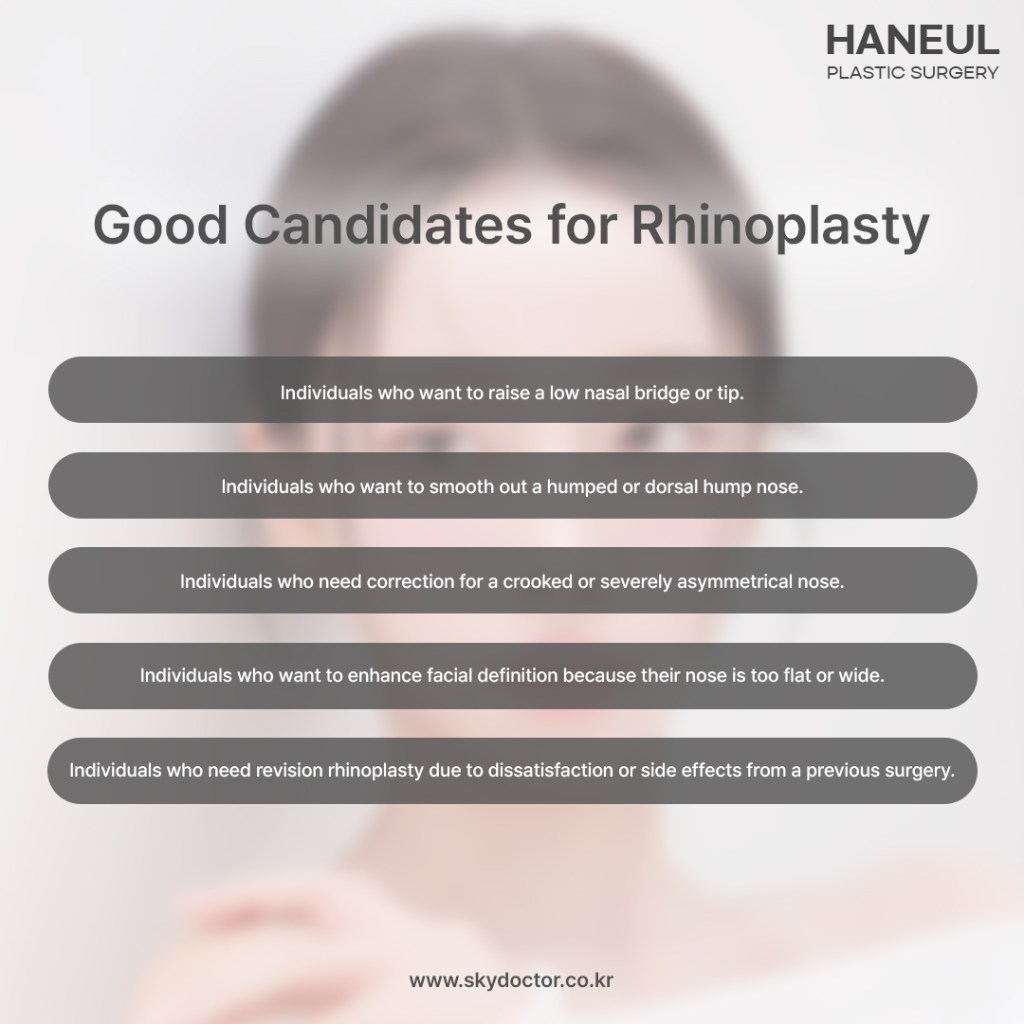
When choosing a clinic for implant-free rhinoplasty, it’s worth checking whether they have real experience working with international patients. Confirming things like whether consultations are available in your language, whether you can get the medical documents and records you’ll need before and after surgery, and whether a remote follow-up system is in place once you’re back home can all help you plan your surgery with more peace of mind. Since autologous cartilage rhinoplasty is a technically demanding procedure that involves precisely shaping and placing cartilage by hand, it’s important to be treated by a board-certified plastic surgeon with substantial hands-on experience using autologous cartilage. The basics to check are whether the surgeon can work with septal, ear, and rib cartilage alike, and whether they have real experience handling reconstruction cases after implant removal. If you want a nose built entirely from your own tissue — natural-looking and long-lasting, with no concerns about foreign material — implant-free rhinoplasty built around your trip to Busan, Korea can be a way to make a real, fundamental change in a single visit.
↑Check detailed information on implant-free rhinoplasty
Q. How long of a stay do I need for implant-free rhinoplasty during a trip to Busan, Korea?
A. We generally recommend planning for a stay of at least 7 to 10 days, including pre-op exams and consultation, plus removing the splint and stitches after surgery. Reconstruction cases after implant removal may require a longer stay, so it’s a good idea to confirm your expected length of stay through an online consultation before your trip.
Q. What does the schedule look like on the day of surgery?
A. Surgery day requires at least half a day, since it includes final pre-op checks and anesthesia preparation. Since cartilage harvesting and the rhinoplasty itself are done together, surgery time can run longer than with standard rhinoplasty. Having someone with you that day is a good idea, and it’s worth asking the clinic in advance for a clear rundown of what to expect.
Q. How is my recovery followed up once I’m back home?
A. Many clinics manage this through telemedicine, letting you share photos or video to check your progress. Since the final result isn’t visible until three to six months later, it’s a good idea to keep sharing your progress consistently after you return home. It’s worth confirming in advance whether the clinic has a proper remote aftercare system for international patients.
Q. Can I do an online consultation before I travel to Busan?
A. Yes, many clinics offer this. Sharing photos of your current nose, your surgical history, and what you’re hoping for online in advance can make your in-person consultation much more efficient once you arrive. If you’ve previously had implant-based rhinoplasty, it’s worth bringing along information about the implant that was used.
Q. When can I fly home after surgery?
A. Most patients fly home after about 7 to 10 days, once their recovery has been checked. Exactly when it’s safe to fly depends on your individual recovery, so it’s safest to follow your surgical team’s guidance. Long flights can affect swelling, so it’s best to build in extra buffer when planning your return date.


답글 남기기