“What should I prepare before my first consultation for breast augmentation in Busan?”
↑Check detailed information on breast augmentation
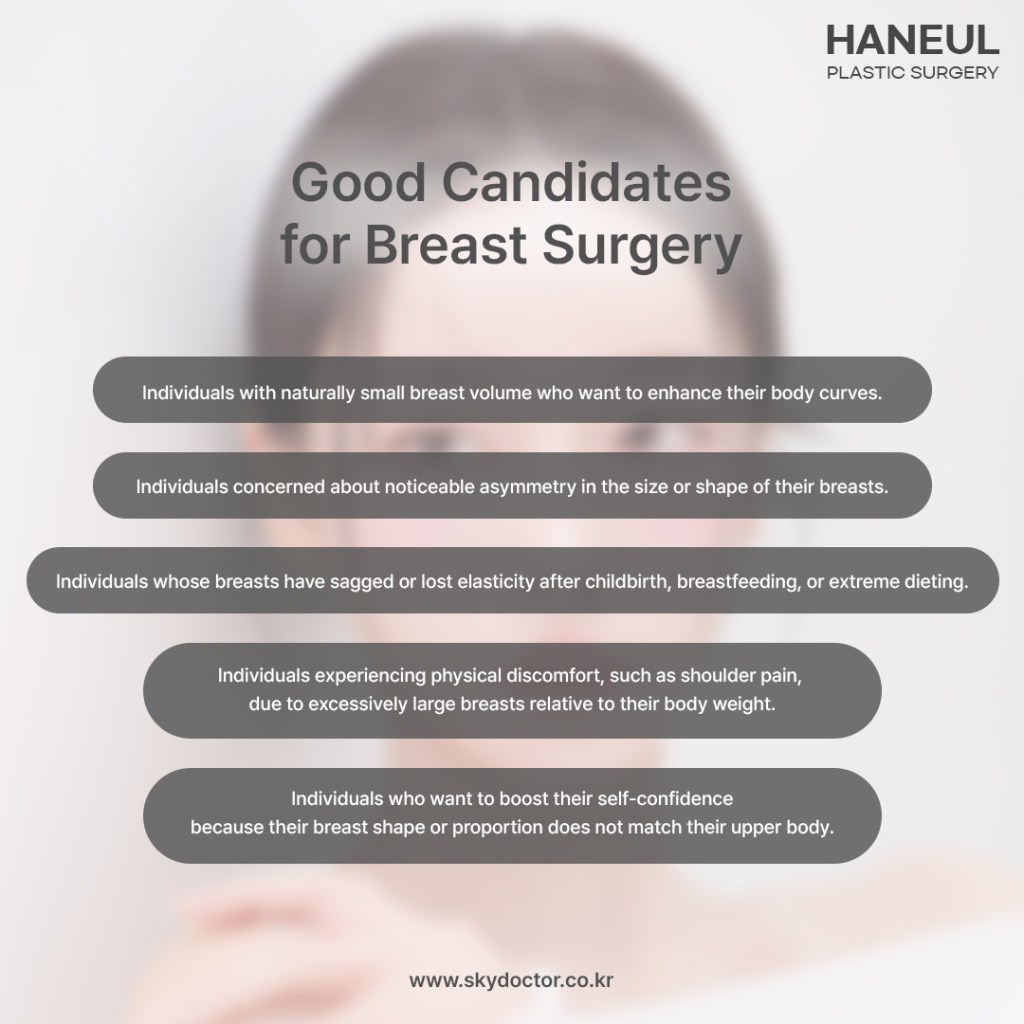
The path to deciding on breast augmentation tends to look a bit different from other cosmetic procedures. People often start a consultation about their face fairly casually, but since the breasts are one of the most private parts of the body, many people spend a long time thinking it over on their own before quietly starting to research their options. Among international visitors researching plastic surgery clinics in Seomyeon, Busan while planning a trip to Korea, more and more are asking specifically about breast augmentation. For some, it’s a long-standing feeling that naturally smaller breast volume has thrown off their overall body proportions; for others, their breasts changed significantly in size or began sagging after pregnancy and breastfeeding; and for others, it’s noticeable asymmetry between the two sides. Korea has built a strong global reputation in breast augmentation, backed by deep clinical experience and well-organized surgical systems, so if you’re planning a trip to Busan, Korea with enough time built in, seriously considering breast augmentation can be a genuinely worthwhile choice.
The first thing to decide in breast augmentation is the type of implant. The most widely used option today is the cohesive gel silicone implant. Compared to earlier generations of silicone implants, it offers significantly improved safety and a more natural feel, and even if it ruptures, the gel holds its shape rather than leaking out. Implants come in two main shapes: round and teardrop. Round implants create fuller volume in the upper part of the breast, while teardrop implants create a shape closer to the breast’s natural contour. Which implant is right for you is decided by considering your current breast tissue, your desired result, and your body shape together.
Where the implant is placed also has a major effect on the result. There’s subglandular placement, where the implant sits above the pectoral muscle, and submuscular placement, where it sits beneath it. Subglandular placement tends to come with relatively less pain after surgery and a faster recovery, but if you have less natural breast tissue, the edges of the implant can be more visible. Submuscular placement covers the implant more naturally, so it tends to give a more natural-looking result for people with thinner breast tissue. These days, a dual-plane technique, which uses only part of the pectoral muscle, is also commonly used, and it works well even in cases with some degree of sagging.
Where the incision is made is another important decision that directly affects scarring. A transaxillary incision, made in the armpit, leaves no scar on the breast itself, which makes it a popular choice for many people. A periareolar incision follows the border of the areola, so the scar tends to be well hidden. An inframammary incision, made along the natural fold beneath the breast, gives the surgeon excellent visibility, which allows for more precise work. The right choice depends on the type and size of implant, so it’s worth discussing thoroughly during your breast augmentation consultation.
Choosing the right implant size is the decision that deserves the most careful thought in breast augmentation. It’s important to find the size that creates the most harmonious overall look by considering your current breast tissue volume, skin elasticity, chest width, shoulder width, and your overall body proportions together. Rather than trying to copy someone else’s result exactly, finding the size that actually suits your own body leads to a far more natural-looking outcome. Preparing reference photos of the look you’re going for before your trip to Korea can make for a much more specific discussion once you’re in your in-person consultation.
Capsular contracture is the complication people worry about most after breast augmentation. It’s completely normal for a capsule of scar tissue to form around the implant, but when that capsule becomes excessively thick or contracts, causing the breast to feel hard and change shape, that’s called capsular contracture. Consistent aftercare after surgery, including massage, helps lower the likelihood of this happening, and the type of implant and where it’s placed also play a role in prevention. Keeping up with this kind of aftercare after you return home is important for making your results last.
↑Check detailed information on breast augmentation
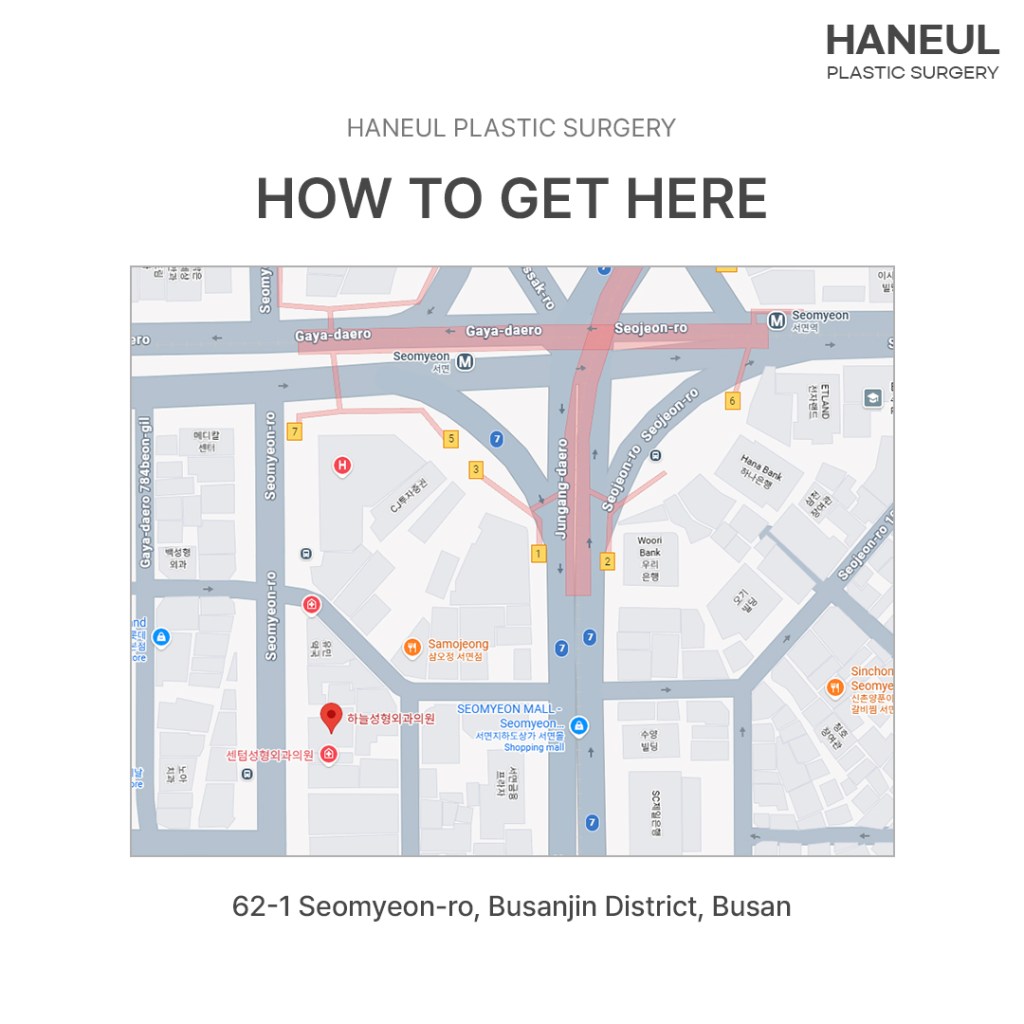
If you’re planning to visit Busan, Korea for breast augmentation, it’s important to plan your stay and surgical schedule together. Breast augmentation typically calls for a stay of at least 7 to 10 days, including pre-op evaluation and consultation, plus checking your early recovery afterward. It’s best to plan your flight home once you’ve reached a basic level of recovery. Busan is well connected, with direct flights to major cities across Asia through Gimhae International Airport, so travel logistics tend to be fairly convenient. Your surgical team is in the best position to tell you exactly when it’s safe to fly.
Many patients also want to know how follow-up works once they’re back home. The final result of breast augmentation isn’t visible until the implants have fully settled into place, usually around three to six months later, so some form of follow-up after you return is necessary. These days, many clinics manage this through telemedicine, letting you share photos or video to check your progress. If you notice anything unusual or you’re concerned about how things are healing, you can simply reach out to your surgical team and share your condition remotely. It’s worth confirming in advance whether the clinic you choose has a proper remote aftercare system for international patients.
You can also arrange an online consultation before your trip to Busan. Sharing details in advance — your current breast condition, what result you’re hoping for, and photos of your body shape — can make your in-person consultation far more efficient once you arrive. Once you’re in Busan, you’ll go through a detailed evaluation, an in-person consultation, and decide on your implant type and size before finalizing your surgical plan, so it’s a good idea to build in at least a day of buffer before your visit.
When choosing a clinic for breast augmentation, it’s worth checking whether they have real experience working with international patients. Confirming things like whether consultations are available in your language, whether you can get the medical documents and records you’ll need before and after surgery, and whether a remote follow-up system is in place once you’re back home can all help you plan your surgery with more peace of mind. The basics to check are whether a board-certified plastic surgeon personally handles everything from consultation to surgery, whether there’s a system in place for a dedicated anesthesiologist to work alongside them, and whether the clinic carries a wide range of implant brands and sizes. Since the results of breast augmentation last a long time, gathering enough information and carefully choosing your clinic before your trip to Busan, Korea is the single most important part of your preparation.
↑Check detailed information on breast augmentation
Q. How long of a stay do I need for breast augmentation during a trip to Busan, Korea?
A. We generally recommend planning for a stay of at least 7 to 10 days, including pre-op exams and consultation, plus checking your early recovery afterward. It’s best to plan your return flight for once you’ve reached a basic level of recovery. The exact length of stay can vary depending on the surgical approach and your personal recovery speed, so it’s worth confirming during your consultation.
Q. What does the schedule look like on the day of surgery?
A. Surgery day requires at least half a day, since it includes final pre-op checks and anesthesia preparation. Afterward, you’ll typically be monitored in a recovery room for a period of time before heading home the same day. It can be hard to get around on your own that day, so having someone with you is a good idea, and it’s worth asking the clinic in advance for a clear rundown of what to expect.
Q. How is my recovery followed up once I’m back home?
A. Many clinics manage this through telemedicine, letting you share photos or video to check your progress. Since the final result isn’t visible until three to six months later, once the implants have fully settled into place, it’s a good idea to keep sharing your progress consistently after you return home. It’s worth confirming in advance whether the clinic has a proper remote aftercare system for international patients.
Q. Can I do an online consultation before I travel to Busan?
A. Yes, many clinics offer this. Sharing your current breast condition, what result you’re hoping for, and photos of your body shape online in advance can make your in-person consultation much more efficient once you arrive. Once you’re there, you’ll go through a detailed evaluation and an in-person consultation, and decide on your implant type and size.
Q. When can I fly home after surgery?
A. Most patients fly home after about 7 to 10 days, once their recovery has been checked. Exactly when it’s safe to fly depends on your individual recovery, so it’s safest to follow your surgical team’s guidance. Long flights can affect swelling, so it’s best to build in extra buffer when planning your return date.


답글 남기기