“Can a facial contouring treatment in Busan, Korea, solve my concerns about my face shape?”
↑Check detailed information on facial contouring
Some people feel fine about their photos from the front, but their mood drops the moment they see one taken from the side. It’s a similar feeling when the lower part of your face looks oddly wide on a video call screen, or when a photo next to a friend makes your jawline look the only one that’s sharp and angular. Among international visitors researching plastic surgery clinics in Seomyeon, Busan while planning a trip to Korea, more and more are asking specifically about facial contouring surgery. Once people realize that contouring with makeup or covering the jawline with their hair doesn’t really fix this at the root, they start looking into reshaping the bone structure itself, and that’s often what brings them to Korea. Korea has built a strong global reputation in facial contouring surgery, backed by deep clinical experience and well-organized surgical systems. It’s probably more accurate to think of facial contouring not simply as surgery to make the face smaller, but as the process of building the foundation that lets your own features stand out at their best.
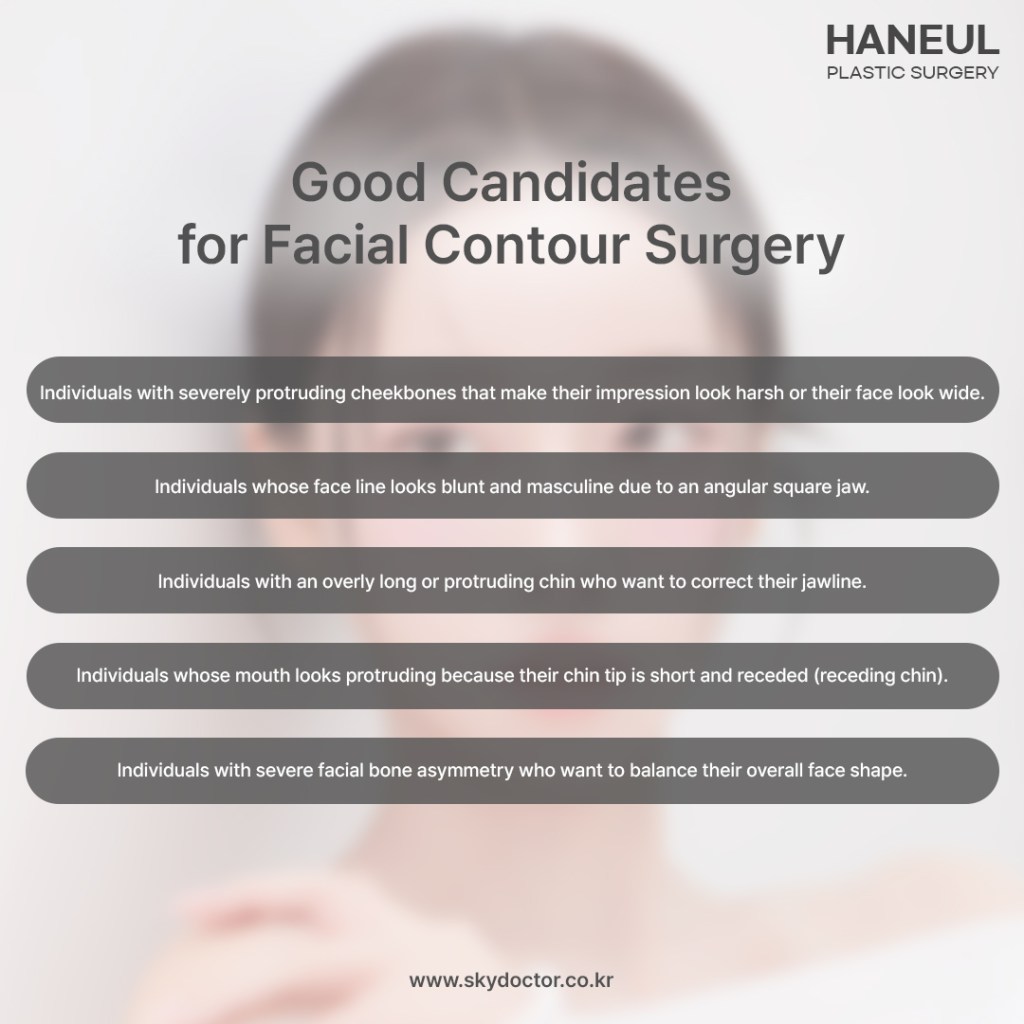
It’s worth starting by acknowledging that there isn’t a single reason a face looks wide. Even when the face looks the same size from the outside, the underlying cause can be completely different from person to person — for some it’s wide bone structure, for others it’s an overdeveloped chewing muscle, and for others it’s a thicker layer of fat in the cheeks. There are also people whose lower face looks heavy simply because the skin and soft tissue have begun to sag. Of these four layers, facial contouring surgery works directly on the bone. That’s exactly why the first thing that happens in a facial contouring consultation is identifying which of these layers is actually the main cause of your face looking wide. If the real cause isn’t the bone and bone surgery is done anyway, you may not see the change you were hoping for; on the other hand, if the cause is the bone and you keep relying only on injections or non-surgical treatments, the same concern just keeps coming back.
The key structure that defines the lower contour of the face is the mandibular angle — the corner of the jawbone that runs from below the ear toward the chin. When this part flares outward, the lower face looks squared off when viewed from the front. Sometimes only the mandibular angle needs to be reshaped, but for people whose entire jawline is thick along the side, the body of the jawbone needs to be addressed as well to create a smooth, continuous line. If only one end is cut without considering the whole, it can actually create an awkward new angle in the middle, so it’s important to design the entire curve, from the mandibular angle all the way to the chin, as one continuous flow. This surgery is performed through an incision inside the mouth, so there’s no visible scarring on the outside of the face. When planning jaw reduction surgery, it’s also standard to check whether the masseter, the chewing muscle, is enlarged as well — because even after the bone is reduced, an overdeveloped muscle can keep the jawline from looking as slim as you’d hoped.
Since the cheekbones affect both the width and the three-dimensional shape of the face at the same time, accurately identifying their direction comes first. People whose cheekbones flare out to the sides tend to look wide from the front, while people whose cheekbones project forward often have their cheekbones stand out first when viewed from the side, giving a stronger overall impression. It’s common for both to be present together, which is why comparing front-facing and side-profile photos side by side is part of the evaluation. The surgical approach typically combines cutting the cheekbone arch and moving it inward with directly reshaping the forward-projecting area. One thing worth keeping in mind is that once the cheekbones are reduced, the cheek tissue beneath them can look relatively more sagged by comparison. That’s why, when planning cheekbone surgery as part of facial contouring, the current volume and skin elasticity of the cheeks are evaluated together, and lifting or volume restoration is considered alongside it if needed.
↑Check detailed information on facial contouring
The proportion between the chin and the lower face is an important factor in how your profile reads. Some people’s chin looks too long relative to the overall length of their face, while others have a chin that’s short or set back, making the area around the mouth look more prominent by comparison. In these cases, the chin can be adjusted by moving it forward or back, or by shortening or lengthening it. Exactly how far it’s safe and natural to move the chin is decided by looking at your bite alignment, the position of your lips, and the line running from the tip of your nose down to your chin, all together. Facial contouring isn’t about looking at just one area in isolation — what matters is designing the overall proportions so that everything is balanced, both from the front and in profile.
If you’re planning to visit Busan, Korea for facial contouring surgery, it’s important to plan your stay and surgical schedule together. Since this surgery works directly with bone, a stay of at least 10 to 14 days is often recommended, including a pre-op 3D CT scan and detailed consultation, plus checking your early recovery and removing stitches afterward. Right after surgery, your whole face will be swollen and you’ll wear a compression band, with the first few days being when swelling is at its worst. Meals need to start with soft foods like porridge or rice gruel and gradually move up from there, so it’s worth thinking ahead about where you’ll stay and how you’ll handle meals during that stretch. Busan is well connected, with direct flights to major cities across Asia through Gimhae International Airport, so travel logistics tend to be fairly convenient. It’s safest to decide when it’s okay to fly based on your surgical team’s guidance, after they’ve checked your swelling and recovery progress.

↑Check detailed information on facial contouring
It helps to understand the general timeline of how swelling goes down after surgery, since it’ll put your mind at ease once you’re back home. Many patients reach a point where they’re comfortable going out in public within one to two weeks, but subtler swelling that isn’t visible from the outside takes several months to fully resolve. There can also be a period where the area around the chin or lips feels a bit numb, but most of that sensation returns over time. Your final facial contour usually settles in around three to six months later, so it’s important not to judge the result based on how you look right when you return home, and instead give it time. Since you’ll be returning to daily life with some swelling still present for a few weeks after you’re home, it’s a good idea to build some flexibility into your work and schedule during that period.
It’s worth understanding in advance how follow-up care works once you’re back home. These days, many clinics manage this through telemedicine, letting you share photos or video to check your progress. If you have questions about your swelling or how sensation is returning, or you notice anything uncomfortable, you can simply reach out to your surgical team and share your condition remotely. Recovery guidelines like oral hygiene care and the gradual return to normal food also need to be followed after you’re back home, so it’s important to get thorough instructions before you leave Korea. If you happen to get the chance to visit Busan again, an in-person visit to confirm your final result is always the best option. It’s worth confirming in advance whether the clinic you choose has a proper remote aftercare system for international patients.
Doing an online consultation before your trip to Korea can make your time there much more efficient. Sharing front and side-profile photos, what’s bothering you most, any history of previous cosmetic or orthodontic procedures, and information about any medications or supplements you’re taking can make your in-person consultation much more specific once you arrive. Once you’re there, a 3D CT scan and proportion analysis will be used to precisely check bone thickness and nerve position before your surgical plan is finalized. If you smoke, it’s worth knowing in advance that you’ll likely be asked to stop for a certain period, since smoking can affect recovery. It also helps to get a rough sense ahead of time, during your online consultation, of whether a non-surgical option like masseter Botox or facial contouring injections would be enough, or whether surgery is actually what you need.
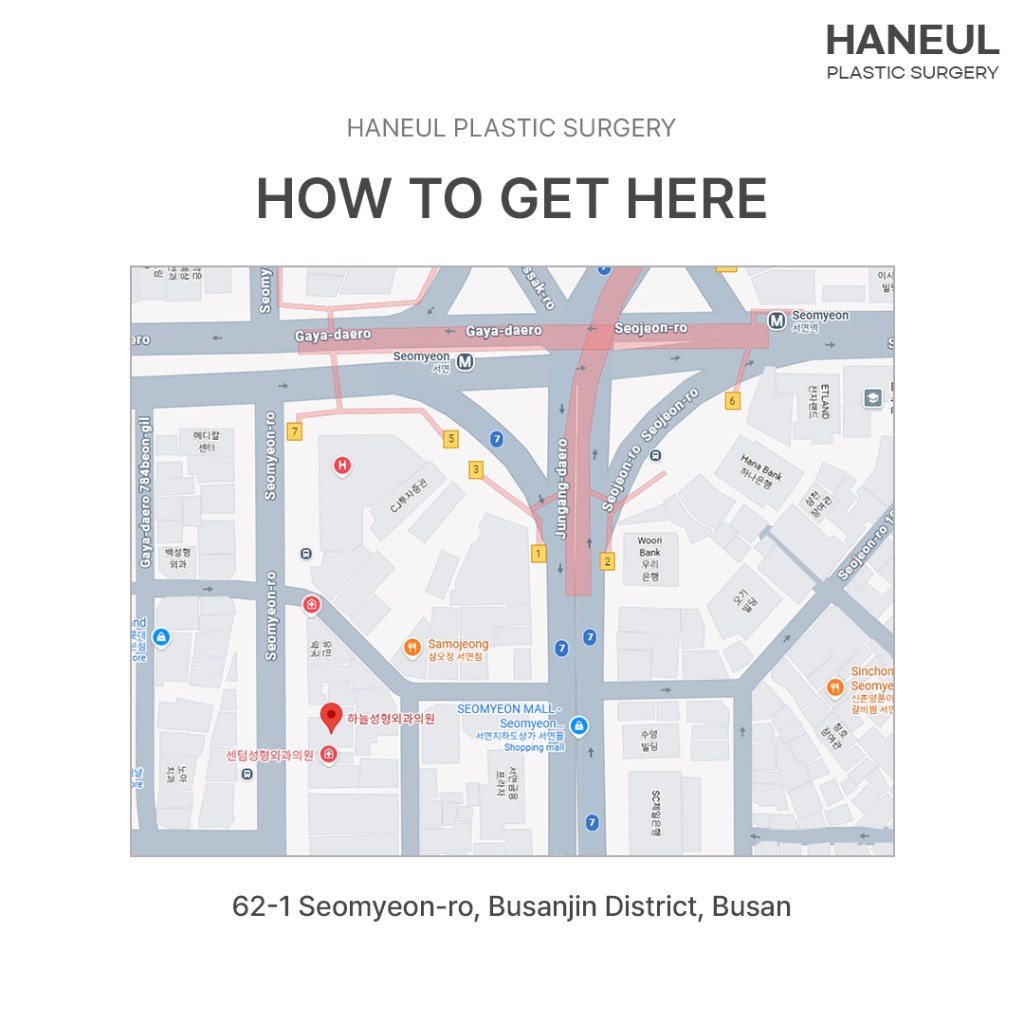
When choosing a clinic for facial contouring surgery, it’s worth checking whether they have real experience working with international patients. Confirming things like whether consultations are available in your language, whether you can get the medical documents and records you’ll need before and after surgery, and whether a remote follow-up system is in place once you’re back home can all help you plan your schedule with more peace of mind. The basics to check are whether a board-certified plastic surgeon personally takes responsibility from consultation through surgery and follow-up, whether there’s a system in place for a dedicated anesthesiologist to work alongside them, and whether they have substantial experience with bone surgery cases. A clinic that’s honest about what’s realistically possible, its limitations, and the risks involved is more trustworthy than one that only talks about the positives. If your concerns about your face shape have been with you for a long time, there’s no need to rush — comparing your options and asking plenty of questions first is never too late. Facial contouring surgery built around your trip to Busan, Korea is best started only after you’ve first gotten a clear, accurate picture of what change is actually possible for your face.
Q. How long of a stay do I need for facial contouring surgery during a trip to Busan, Korea?
A. We generally recommend planning for a stay of at least 10 to 14 days, including a pre-op 3D CT scan and consultation, plus an early recovery check and stitch removal afterward. Since this surgery works directly with bone, it’s safest to plan your return flight for once your initial swelling has settled down to some degree. The exact length of stay can vary depending on the extent of surgery and your recovery speed, so it’s worth confirming through an online consultation before your trip.
Q. What does the schedule look like on the day of surgery?
A. Surgery day requires at least half a day, since it includes final checks and anesthesia preparation. Afterward, you’ll be monitored thoroughly in a recovery room before being given guidance on what comes next. How long this takes can vary depending on the extent of surgery, and having someone with you that day is a good idea. It’s worth asking the clinic in advance for a clear rundown of what to expect on the day.
Q. Is it okay to fly home while I still have some swelling?
A. Many patients reach a point where they’re comfortable going out in public within one to two weeks after surgery, but subtler swelling takes several months to fully resolve. It’s safest to have your surgical team confirm your swelling and recovery progress before deciding when to fly home. It’s a good idea to build some flexibility into your schedule after you return.
Q. How is my recovery followed up once I’m back home?
A. Many clinics manage this through telemedicine, letting you share photos or video to check your progress. If you have questions about swelling or how sensation is returning, you can simply reach out to your surgical team and share your condition remotely. It’s worth confirming in advance whether the clinic has a proper remote aftercare system for international patients.
Q. Can I do an online consultation before I travel to Korea?
A. Yes, many clinics offer this. Sharing front and side-profile photos, what’s bothering you, any history of previous cosmetic or orthodontic procedures, and information about medications you’re taking in advance can make your in-person consultation much more efficient once you arrive. Once you’re there, your surgical plan is finalized after a 3D CT scan and detailed evaluation.


답글 남기기