“When is it safe to fly after eyelid surgery?”
There’s a moment every morning, mid-eyeliner, when your hand just stops. You draw the line right along your eyelid, but the second you open your eyes, it disappears into the crease. Eyeshadow gets stuck and smudges right where the eyelid folds. You’re spending more time on eye makeup every year, but the result never seems to change. Some days, your mascara doesn’t even hold — your lashes just get pressed down by the weight of your eyelid and droop right back. Among international visitors researching plastic surgery clinics in Seomyeon, Busan while planning a trip to Korea, more and more are asking specifically about eye surgery. Many of them start wondering if the problem isn’t really about technique — maybe it’s the actual structure of the eye itself — and that’s what leads them to start looking into Korea’s eye surgery field. Korea has built a strong global reputation in eye surgery, backed by deep clinical experience and well-organized surgical systems. Eye surgery changes the shape of your eyes, sure, but it also changes how much time you spend in front of the mirror and how you feel the moment you start your day.
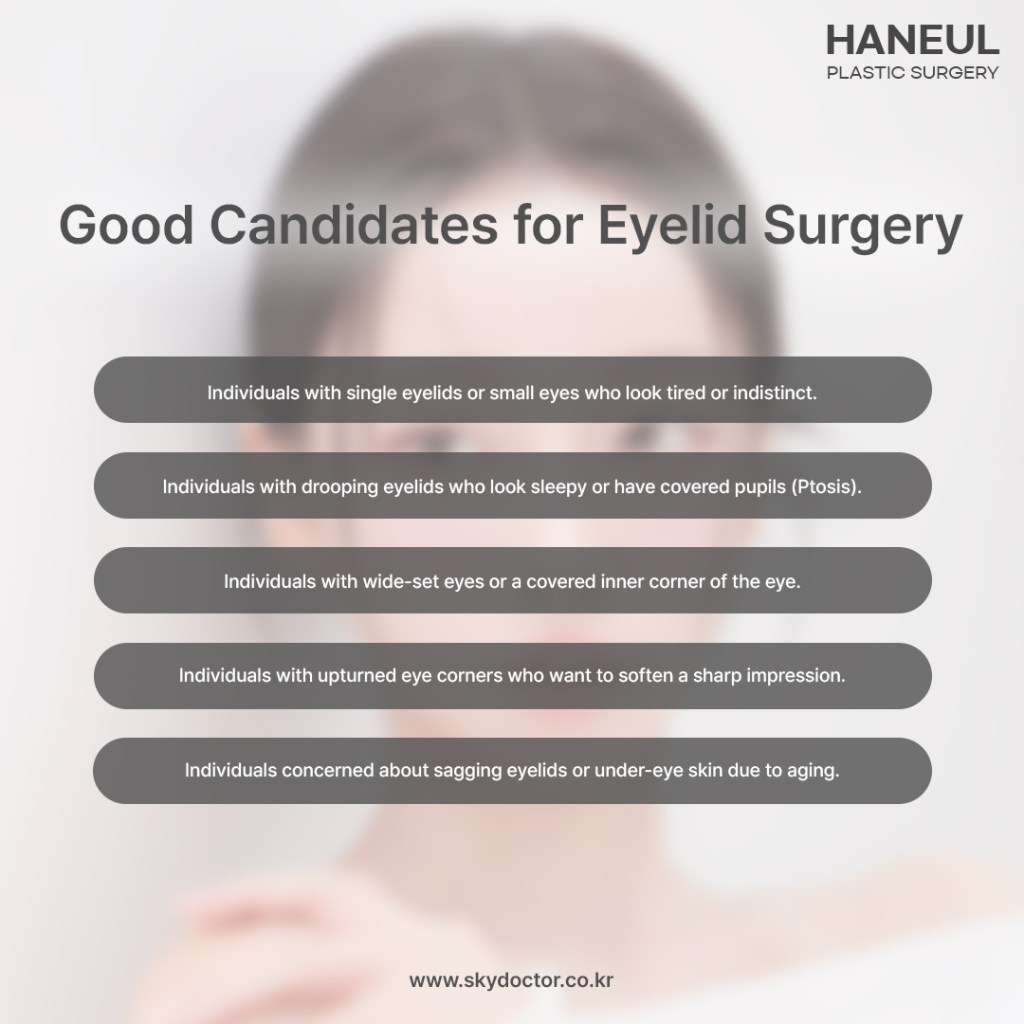
The phrase “my eyes look small” is actually standing in for several different underlying causes. Some people really do have smaller eyes, in both width and height. Others have plenty of eye size to work with, but thick eyelids cover part of the eye. Some people have an epicanthal fold at the inner corner that makes the eye look shorter than it is. Others have weak muscles for opening the eye, so the eye only opens about halfway. And some have excess skin on the upper eyelid that gets in the way of their field of vision. All of these get described with the same sentence — “my eyes look small” — but the surgery you actually need is completely different depending on which of these is really going on. That’s why the first thing that should happen in an eye surgery consultation isn’t deciding which procedure to get — it’s figuring out the real reason your eyes look smaller than you’d like. Skip that step and jump straight to deciding on a crease, and you may not get the change you were hoping for.
↑Check detailed information on eyelid surgery
The thickness of your eyelid and how much fat it holds are the most practical factors in choosing the right surgical method. If your eyelids are thin with relatively little fat, even a simpler method can create a clean, well-defined crease. But if your eyelids are thick with more fat, simply using sutures to hold a crease in place can leave your eyes looking puffy, as if you hadn’t slept well, or the crease can loosen over time. In these cases, a method that also addresses the fat inside the eyelid while shaping the crease tends to give a more stable result. For people whose eyelid skin has started to sag with age, deciding how to handle that excess skin needs to come before deciding on the crease itself. Rather than asking whether the non-incisional or incisional method is better in general, the more accurate question is which one actually fits your eyelids. If your trip is short, the non-incisional method may put less pressure on your schedule, but depending on your eyelid condition, the incisional method may actually be the better fit — so it’s important to get a proper evaluation during your consultation.
Deciding on the double eyelid crease isn’t just about picking a height — the shape and starting point need to be designed together as well. Depending on where the crease starts near the inner corner, your eyes can look more open at the inner corner, and depending on how the crease widens toward the outer corner, your eyes can look longer. The distance between your eyebrows and eyes is another important variable. If you have a short brow-to-eye distance and the crease is set too high, the space above your eye can look cramped; if that distance is already generous and the crease is set too low, you may barely notice a change at all. In eye surgery, deciding on the crease isn’t about picking a number — it’s about reading the overall mood of your face along with the space above your eyes to find the position that actually fits. Putting together reference photos of eye shapes you like before your trip to Korea can make for a much more specific conversation once you’re in your in-person consultation.
Corner surgery, which changes the direction and length of your eye shape, can change your entire look, so it calls for real care. Inner-corner surgery (epicanthoplasty), which releases the epicanthal fold covering the inner corner, gives a more open look to people who feel their inner corner is too covered. Outer-corner surgery (canthoplasty), which opens up the outer corner, extends the horizontal length of the eye to make it look longer. Lower-corner surgery, which adjusts the lower eyelid line, changes the vertical size of the eye and its overall angle. The tricky part is that once you add one of these, it can feel like you need to add another. But more corner procedures doesn’t automatically mean a better result — opening things up too aggressively can make the eyes look unnaturally protruding, or create an awkward gap between the eyes. Looking at the distance between your eyes, your eye size, and how everything works together with your eyebrows, and adjusting only what’s truly needed, tends to lead to a result that still looks comfortable years down the line.
When the muscle responsible for opening the eye isn’t strong enough, double eyelid surgery alone has its limits. When the levator muscle is weak, the eyelid covers more of the upper part of the eye than it should, and every time you try to open your eyes wide, you end up using your forehead muscles to help. Over time, this habit can deepen horizontal forehead wrinkles, and your eyes can start to feel heavier and more tired as the day goes on. For people in this situation, creating a double eyelid crease alone won’t change the fact that the eyelid itself still covers the eye the same way, so satisfaction can be low — which is why ptosis correction, which addresses the muscle directly so the eye can open properly, is often needed alongside it. It helps your surgeon make this call if, during your eye surgery consultation, you show them how your eyes look both at rest and when opened as wide as possible. Sending front-facing photos of both your resting eyes and your eyes opened as wide as possible during an online consultation before your trip can be a big help in setting the right direction in advance.

↑Check detailed information on eyelid surgery
If you’re planning to visit Busan, Korea for eye surgery, it’s important to plan your stay and surgical schedule together. Fast-recovery procedures like non-incisional double eyelid surgery can often work with a trip of around three nights and four days, while the incisional method, ptosis correction, or a combination with corner surgery usually calls for a stay of at least 7 to 10 days. Before surgery, you’ll need to disclose any medications or supplements you’re taking, your eye health history, and your contact lens habits, and on the day of surgery, the design decided during your consultation will be checked again with your eyes both open and closed before the procedure begins. Swelling and bruising are most noticeable in the first few days, and the crease will look higher and more defined than it actually is at that stage. Much of the swelling resolves within one to two weeks, revealing a progressively more natural look, but the crease may not be fully settled yet by the time you fly home. When it’s safe to resume wearing contacts or eye makeup depends on how your recovery is going, so it’s safest to follow your surgical team’s guidance. Busan is also fairly accessible, with direct flights to major cities across Asia through Gimhae International Airport.
It helps to understand in advance how follow-up care works once you’re back home, since it’ll put your mind at ease. The crease needs at least a month to settle comfortably into place, and achieving the fully refined final result can take three to six months, so some form of follow-up after you return is necessary. These days, many clinics manage this through telemedicine, letting you share photos or video to check your progress. Try not to draw conclusions too early based on how unfamiliar your eyes may look at first — if you notice anything you’re curious or concerned about, you can simply reach out to your surgical team and share your condition remotely. If you happen to get the chance to visit Busan again, an in-person visit to confirm your final result is always the best option. It’s worth confirming in advance whether the clinic you choose has a proper remote aftercare system for international patients.
How you communicate the look you want when preparing for your first consultation has a big effect on how satisfied you’ll be with the result. Words like “bigger,” “more defined,” or “natural” can mean completely different things to different people, so you and your surgeon might actually be picturing two different results. It helps to describe the overall mood you’re going for — soft, polished, bright and open — and to be specific with your reference photos too, pointing out exactly what you like, whether it’s the crease height or the direction of the eye shape. Sharing photos of your current eyes, your eye surgery history, and any medications you’re taking during an online consultation before your trip to Korea can make your time there much more efficient. That said, it’s worth remembering that someone else’s eyes work because they suit that person’s whole face. Eye size, eyebrow shape, and the position of your nose and lips all need to be considered together to get that same kind of look to work on your own face.
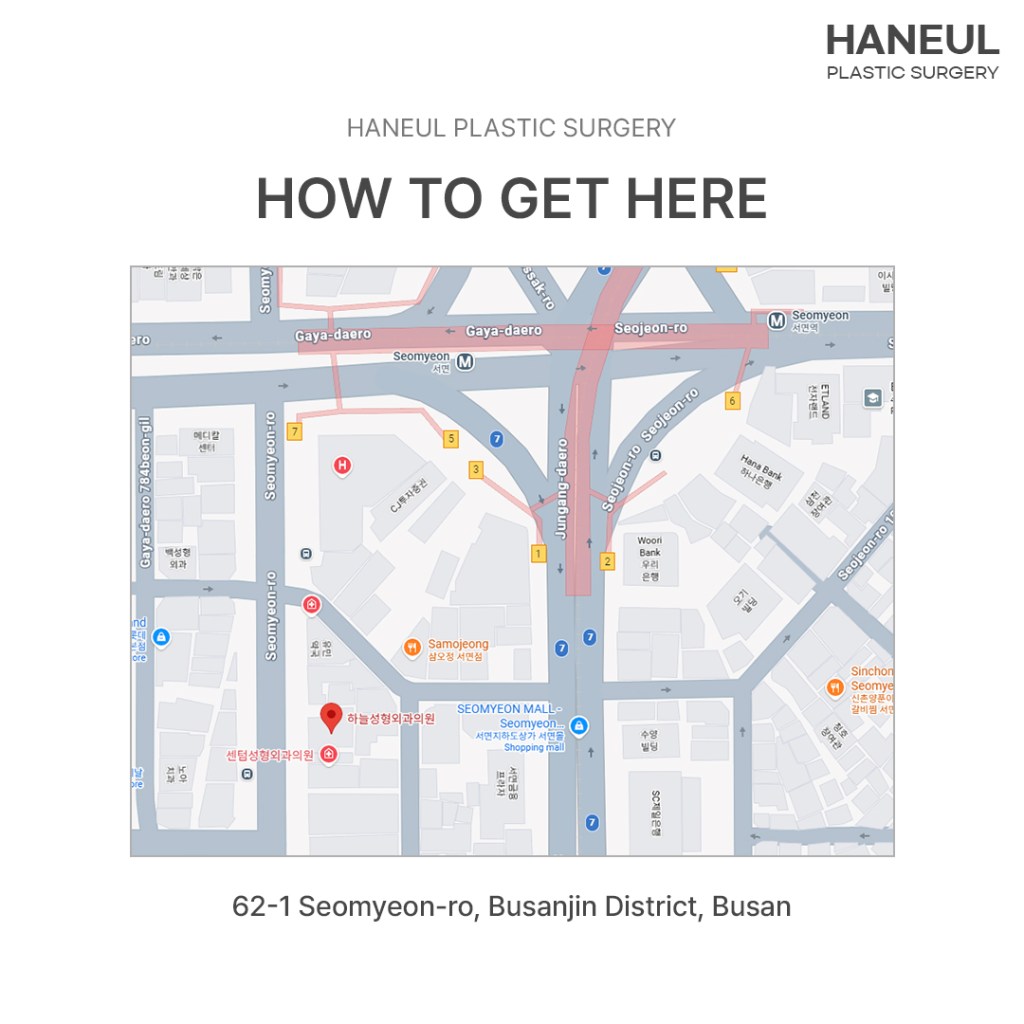
When choosing a clinic for eye surgery, it’s worth looking at both their experience with international patients and how well their aftercare carries through after surgery. Confirming things like whether consultations are available in your language, whether you can get the medical documents and records you’ll need before and after surgery, and whether a remote follow-up system is in place once you’re back home can all help you plan your schedule with more peace of mind. The basics to check are whether a board-certified plastic surgeon personally handles everything from consultation through surgery and follow-up, whether there’s a system for a dedicated anesthesiologist to work alongside them, and whether they have broad experience across non-incisional and incisional methods, ptosis correction, corner surgery, and revision cases. A clinic that’s honest about what’s realistically possible and its limitations, rather than only talking about the positives, is more trustworthy. If that discomfort you feel every morning in front of the mirror has been a long-standing concern, an eye surgery consultation built around your trip to Busan, Korea is a good place to start by calmly figuring out exactly what your eyes actually need.
↑Check detailed information on eyelid surgery
Q. How long of a stay do I need for eye surgery during a trip to Busan, Korea?
A. It depends on the procedure. Fast-recovery procedures like non-incisional double eyelid surgery can often work with a trip of around three nights and four days, while the incisional method, ptosis correction, or a combination with corner surgery usually calls for at least 7 to 10 days. It’s best to plan a schedule that includes your pre-op consultation and a post-surgery recovery check.
Q. What does the schedule look like on the day of surgery?
A. Surgery day requires at least half a day, since it includes final checks and anesthesia preparation. The design decided during your consultation is checked again with your eyes both open and closed before the procedure begins. Afterward, you’ll be monitored in a recovery room before getting guidance on what comes next, and having someone with you that day is a good idea.
Q. Is it okay to fly home while I still have some swelling?
A. Swelling and bruising are most noticeable in the first few days and go down significantly within one to two weeks. It’s safest to have your surgical team check your incisions and swelling before deciding when to fly home. Since it takes more time for the crease to fully settle, it’s a good idea to build some flexibility into your schedule after you return.
Q. How is my recovery followed up once I’m back home?
A. Many clinics manage this through telemedicine, letting you share photos or video to check your progress. If you notice anything you’re curious or concerned about, you can simply reach out to your surgical team and share your condition remotely. It’s worth confirming in advance whether the clinic has a proper remote aftercare system for international patients.
Q. What should I prepare for an online consultation before my trip to Korea?
A. It helps to share front-facing photos of your eyes both at rest and opened as wide as possible, reference photos of eye shapes you like, your eye surgery history, and information about any medications you’re taking and your contact lens habits. This makes your in-person consultation much more specific and helps you use your time during your trip more efficiently.


답글 남기기