“Does Treating the SMAS Layer Change the Results of a Mini Facelift?”
↑Check detailed information about mini facelifts
Some people find themselves tilting the camera upward every time they take a selfie. Shoot from above looking down, and the jawline looks sharper and the cheeks look lifted, so that angle quietly becomes a habit. But then a friend takes a photo straight on, or from a low angle, and suddenly you notice the lines sagging down beside your mouth and the fullness sitting on top of your jawline — and it can really throw you off some days. Among international visitors researching plastic surgery clinics in Seomyeon, Busan while planning a trip to Korea, more and more are asking specifically about the mini facelift. Many of them aren’t looking for a dramatic change — they just want to get back a little closer to the facial contour they used to have. Korea has built a strong global reputation in lifting surgery, backed by deep clinical experience and well-organized surgical systems, which is why people who feel they only look okay from certain angles, and want a face that looks comfortable from any angle, are increasingly coming to Korea.
Let’s start by clarifying exactly what “mini facelift” means. A facelift, broadly speaking, refers to surgery that lifts sagging tissue back up and secures it in place, and a mini facelift refers to a version of that surgery with a reduced incision and dissection area, designed to lower the burden of recovery. That said, what different clinics mean by “mini facelift” can vary somewhat. Some use the term for a procedure that works mainly on the cheeks and jawline through a short incision in front of the ear, while others use it for a procedure that extends the incision behind the ear as well, addressing part of the neckline too. If you’ve already looked into a similarly named procedure back home, it’s worth remembering that the same name can mean something different depending on the clinic. During your mini facelift consultation, it helps to ask specifically where the incision starts and ends, which tissue layer is actually being addressed, and which area the procedure is meant to target — that makes it much easier to compare clinics accurately.
Understanding facial aging layer by layer makes the difference between surgical approaches much clearer. Beneath the skin of the face is a layer of fat, and beneath that is a thin fascia layer called the SMAS. When you’re young, this fascia layer firmly supports the fat and skin sitting on top of it, but as you age, it loosens, and the tissue resting on it sags downward along with it. A method that simply pulls and secures the skin alone can look tight right away, but because the stretched skin stays under constant tension, it tends to sag again over time, and it can sometimes create an unnatural, overly pulled expression. Lifting and securing the SMAS layer along with the skin, on the other hand, reduces the tension placed on the skin itself, so the expression stays more natural and the results tend to last longer. When choosing a mini facelift, the deciding factor for your results isn’t simply that the surgical area is smaller — it’s whether the SMAS layer is being properly addressed even within that smaller area.
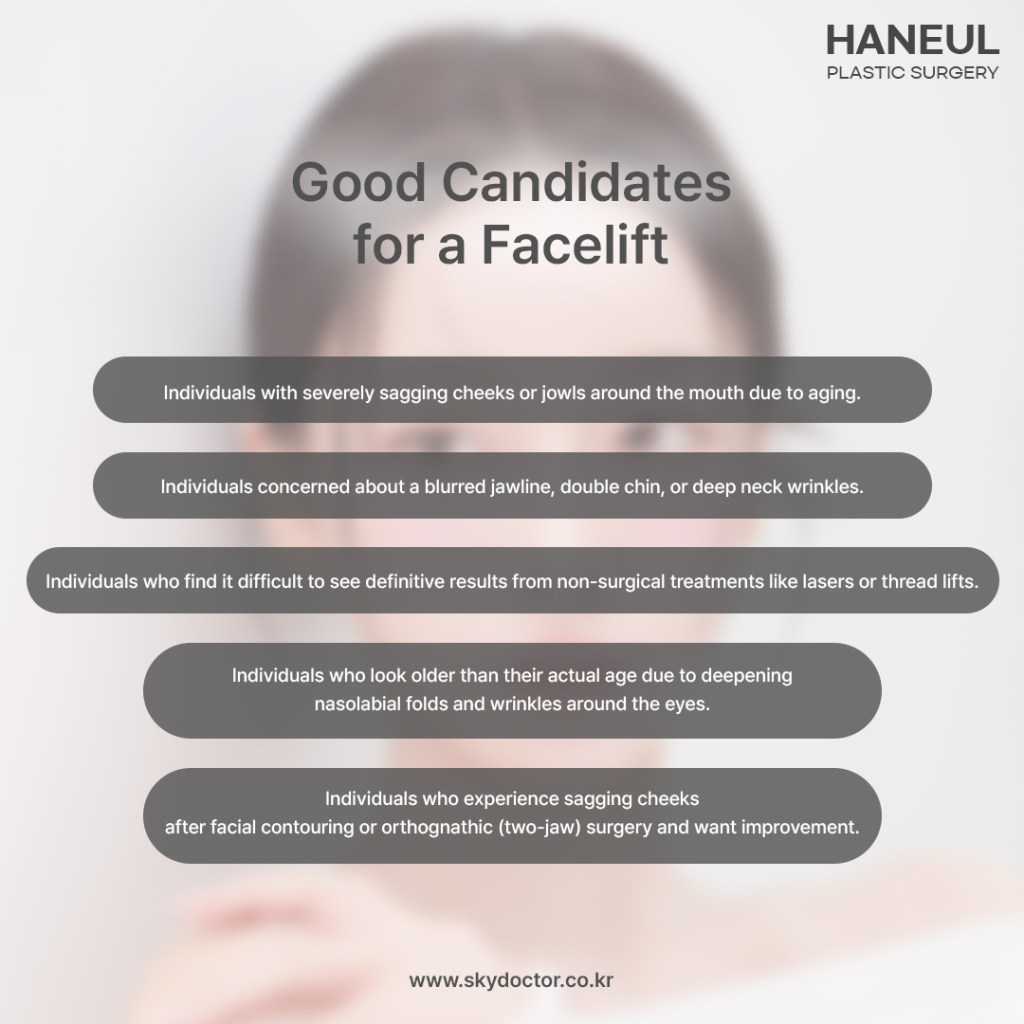
It’s worth being realistic about who’s actually a good fit for a mini facelift. Typical candidates include people whose nasolabial folds beside the mouth have started to deepen, people whose jawline has lost definition because tissue has settled on top of it, or people whose cheeks have dropped enough to give their whole expression a heavier look. In terms of age, people in their late 30s to early-to-mid 50s, whose sagging is moving from an early stage into a more moderate one, often consider this procedure — though the degree of sagging matters more than age itself. On the other hand, people with noticeable sagging and wrinkling in the neck area, or whose skin laxity has already progressed quite significantly, may not get a satisfying result from a mini facelift alone. In these cases, a more extensive facelift or a neck-focused procedure is usually considered alongside it. Sharing front-facing and side-profile photos online before your trip to Korea can help you get an early sense of whether a mini facelift alone would be enough for your case.
↑Check detailed information about mini facelifts
Since concerns about scarring tend to run high, it’s worth knowing in detail exactly where the incision lines run. The incision for a mini facelift typically follows the natural crease in front of the ear, designed to stay hidden naturally along the border of the outer ear. When needed, it can extend a short distance behind the ear or just inside the hairline. Because the line sits between your hairline and the natural curve of your ear, it tends to become quite inconspicuous over time. What actually matters more than the incision line itself is the closure technique and how much tension is placed on the skin. High tension can widen the resulting scar or create a pulled-down look to the earlobe, which is exactly why the SMAS-layer fixation discussed earlier — which reduces tension on the skin — is directly tied to how well the scar heals. Scar care is something you’ll need to continue after you return home, so it’s worth getting detailed guidance on how to manage it before you leave Korea.
If you’re planning to visit Busan, Korea for a mini facelift, it’s important to plan your stay and surgical schedule together. A mini facelift typically calls for a stay of at least 7 to 10 days, including a detailed pre-op consultation and evaluation, plus checking your early recovery and removing stitches afterward. Surgery day requires at least half a day, since it includes a final consultation and anesthesia preparation, and right after surgery, you’ll be monitored in a recovery room while wearing a compression band. Swelling and bruising are most noticeable in the first few days, and you may feel some tightness or a muffled sensation around your ears, so it’s a good idea to choose accommodation close to the clinic for your comfort. Busan is well connected, with direct flights to major cities across Asia through Gimhae International Airport, so travel logistics tend to be fairly convenient. It’s safest to decide when it’s okay to fly based on your surgical team’s guidance, after they’ve checked your swelling and the condition of your incisions.

Almost everyone goes through the process of comparing this to non-surgical treatments at some point. Thread lifting is quick and recovery is fast, which makes it a good option for early-stage sagging, but there’s a real limit to how much lift it can provide and how long that lift lasts. Ultherapy Prime uses ultrasound energy to stimulate deeper layers of tissue and improve elasticity, while radiofrequency devices like InMode or Oligio X are used to firm up the skin and underlying tissue and refine facial contour. These treatments work by improving the condition of the tissue rather than physically lifting sagging tissue back into place, so they have real limits when it comes to actually repositioning tissue that has already dropped. If you’ve kept up with these kinds of treatments back home and found yourself less and less satisfied over time, that may be a sign it’s time for a method that actually repositions the tissue. After a mini facelift, keeping up with device-based treatments back home to maintain elasticity can help extend the results even longer — so it’s best to think of these as playing different roles rather than as substitutes for each other.
It’s also worth knowing that a mini facelift alone won’t solve every concern. If you lift sagging tissue on a face that has also lost volume, you may end up with tissue in a higher position but the same hollow, sunken look. For these cases, adding fat grafting, skin boosters, or filler to restore lost volume tends to deliver a much more vibrant, refreshed result, and planning this together within the same trip to Korea can save you the trouble of multiple visits. If sagging eyelid skin is making the upper part of your face look heavy, upper blepharoplasty or a brow lift may be considered alongside it; if hollowing under the eyes is a major factor in your overall look, under-eye fat repositioning may be worth considering as well. That said, adding more procedures together can also extend your recovery and length of stay, so it’s worth setting your priorities during an online consultation before your trip. Since changing one part of the face can make the rest stand out by comparison, it’s also perfectly fine to look at the overall balance and decide to tackle things in stages, starting with what matters most.
↑Check detailed information about mini facelifts
Knowing what to expect for follow-up care and setting realistic expectations in advance will make you much more satisfied with the result once you’re back home. It typically takes at least a month for your facial contour to settle into place and for that tightened feeling to become comfortable, and the fully refined final result can take three to six months, so some form of follow-up after you return is necessary. These days, many clinics manage this through telemedicine, letting you share photos or video to check your progress, and if you notice anything you’re curious or concerned about, you can simply reach out to your surgical team and share your condition remotely. A period of numbness around the ears is normal and temporary, and sensation typically returns over time. A mini facelift doesn’t stop aging — it rolls back some of your current sagging — and how long the results last depends on your skin condition, lifestyle, and weight changes. Rare complications like hematoma, infection, or asymmetry can occur, so be sure to disclose your smoking habits and any medications you’re taking beforehand, and if you happen to get the chance to visit Busan again, an in-person visit to confirm your progress is always the best option.
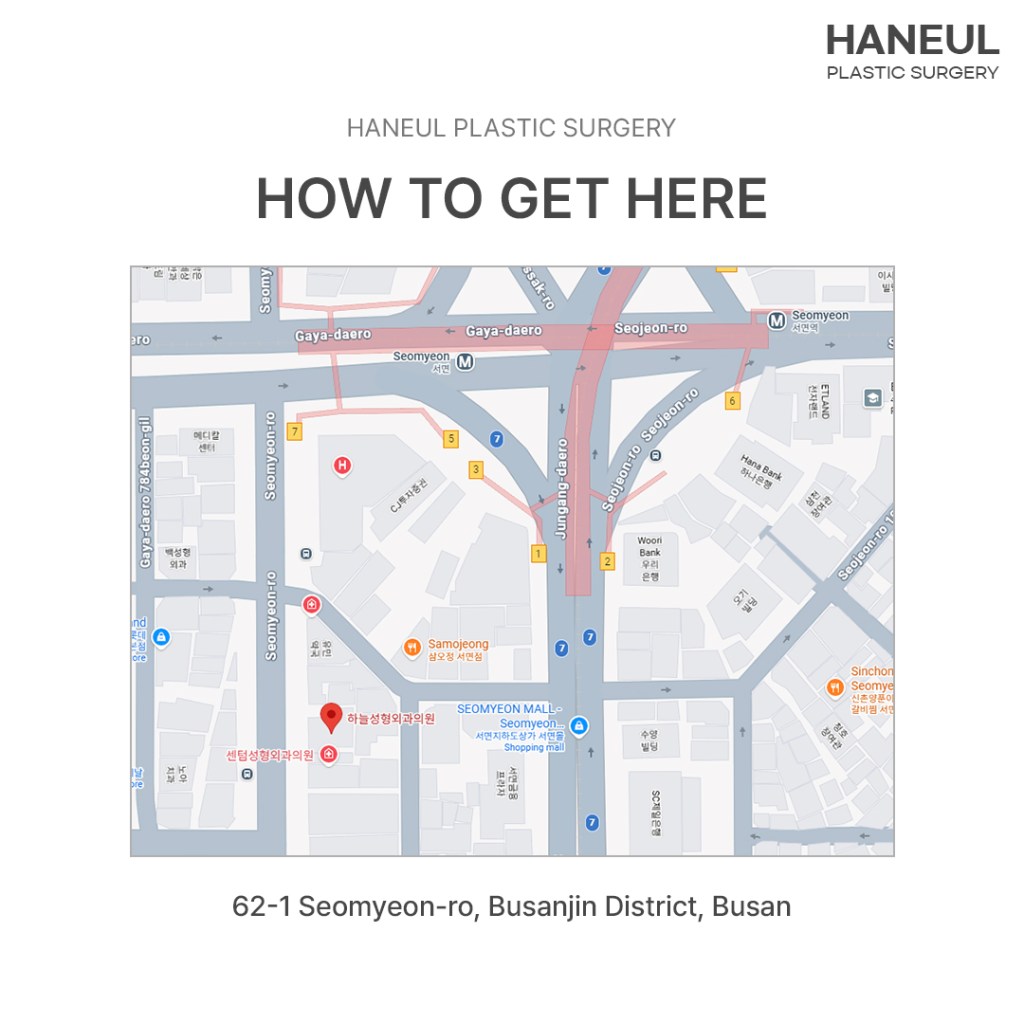
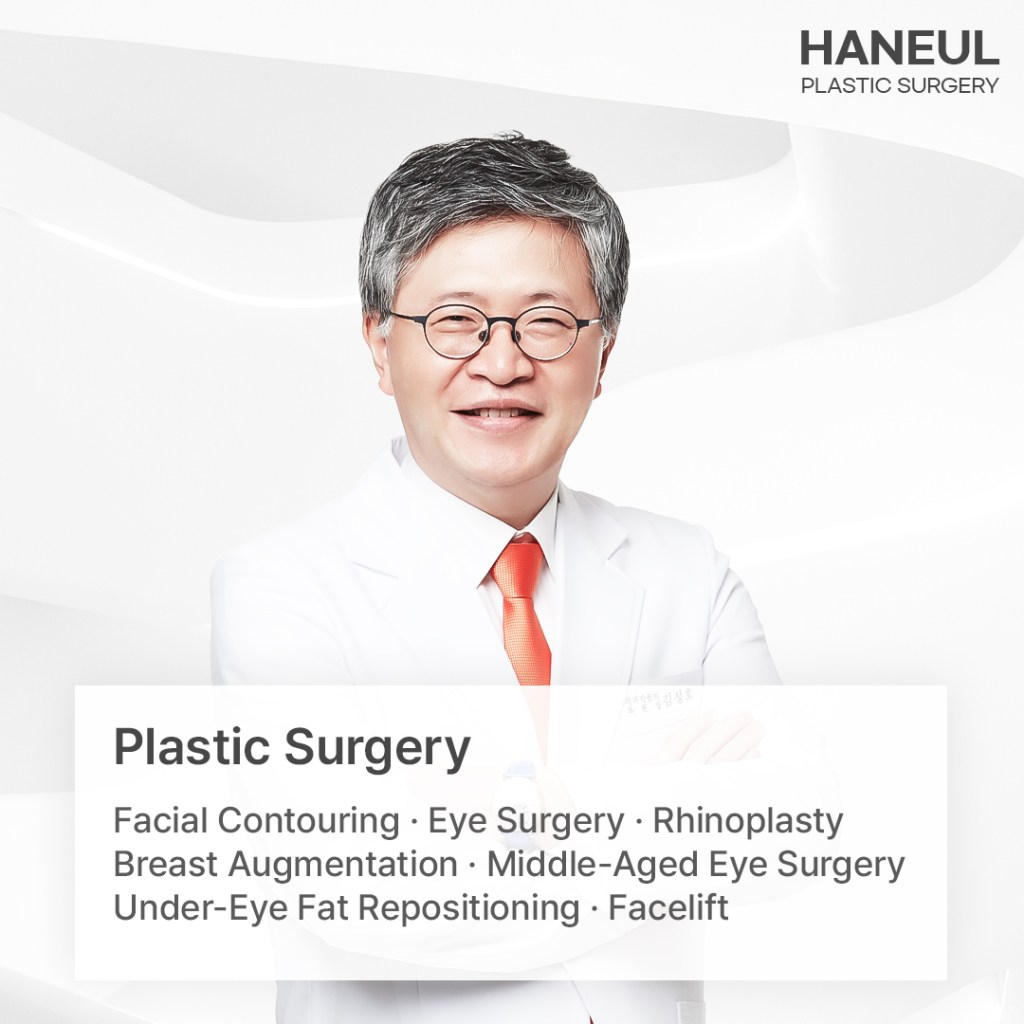
When choosing a clinic for a mini facelift, it’s worth looking at their experience with international patients, surgical skill, safety systems, and aftercare together. Confirming things like whether consultations are available in your language, whether you can get the medical documents and records you’ll need before and after surgery, and whether a remote follow-up system is in place once you’re back home can all help you plan your schedule with more peace of mind. The basics to check are whether a board-certified plastic surgeon personally takes responsibility from consultation through surgery and follow-up, whether there’s a system for a dedicated anesthesiologist to work alongside them, and whether they have real experience with both mini facelifts and full facelifts. Whether they calmly walk you through the incision extent, whether the SMAS layer will be addressed, and any combined procedures using photos and diagrams, and whether they’re honest about limitations and risks as well as benefits, are good indicators of how trustworthy a clinic really is. Even if sagging has been on your mind for a long time, there’s no need to rush — comparing your options and asking plenty of questions first is never too late. If you want a face that looks comfortable without relying on a flattering camera angle, a mini facelift consultation built around your trip to Busan, Korea is a good place to start by calmly figuring out exactly which layer your sagging is actually coming from.
Q. How long of a stay do I need for a mini facelift during a trip to Busan, Korea?
A. We generally recommend planning for a stay of at least 7 to 10 days, including a detailed pre-op consultation and evaluation, plus an early recovery check and stitch removal afterward. If you’re planning to combine other procedures, your stay may need to be longer, so it’s worth confirming your expected schedule through an online consultation before your trip.
Q. What does the schedule look like on the day of surgery?
A. Surgery day requires at least half a day, since it includes a final consultation and anesthesia preparation. Afterward, you’ll be monitored in a recovery room while wearing a compression band before getting guidance on what comes next. Having someone with you that day is a good idea, and it’s worth asking the clinic in advance for a clear rundown of what to expect.
Q. Is it okay to fly home while I still have some swelling?
A. Swelling and bruising are most noticeable in the first few days, and many patients reach a level where they’re comfortable going out in public around the one-week mark. It’s safest to have your surgical team check your swelling and incisions before deciding when to fly home. Since it takes more time for your facial contour to fully settle, it’s a good idea to build some flexibility into your schedule after you return.
Q. How is my recovery followed up once I’m back home?
A. Many clinics manage this through telemedicine, letting you share photos or video to check your progress. If you notice anything you’re curious or concerned about, you can simply reach out to your surgical team and share your condition remotely. It’s worth confirming in advance whether the clinic has a proper remote aftercare system for international patients.
Q. What should I prepare for an online consultation before my trip to Korea?
A. It helps to share front-facing and side-profile photos, what’s bothering you most, your history of any previous lifting procedures, and information about medications you’re taking and whether you smoke. This makes your in-person consultation much more specific and helps you use your time during your trip more efficiently.


답글 남기기